> For the complete documentation index, see [llms.txt](https://docs.easycalling.easyplatform.app/llms.txt). Markdown versions of documentation pages are available by appending `.md` to page URLs; this page is available as [Markdown](https://docs.easycalling.easyplatform.app/getting-started/easy-calling-configuration.md).
# Configuration Guide
Follow these steps to configure and enable Easy Calling in your tenant
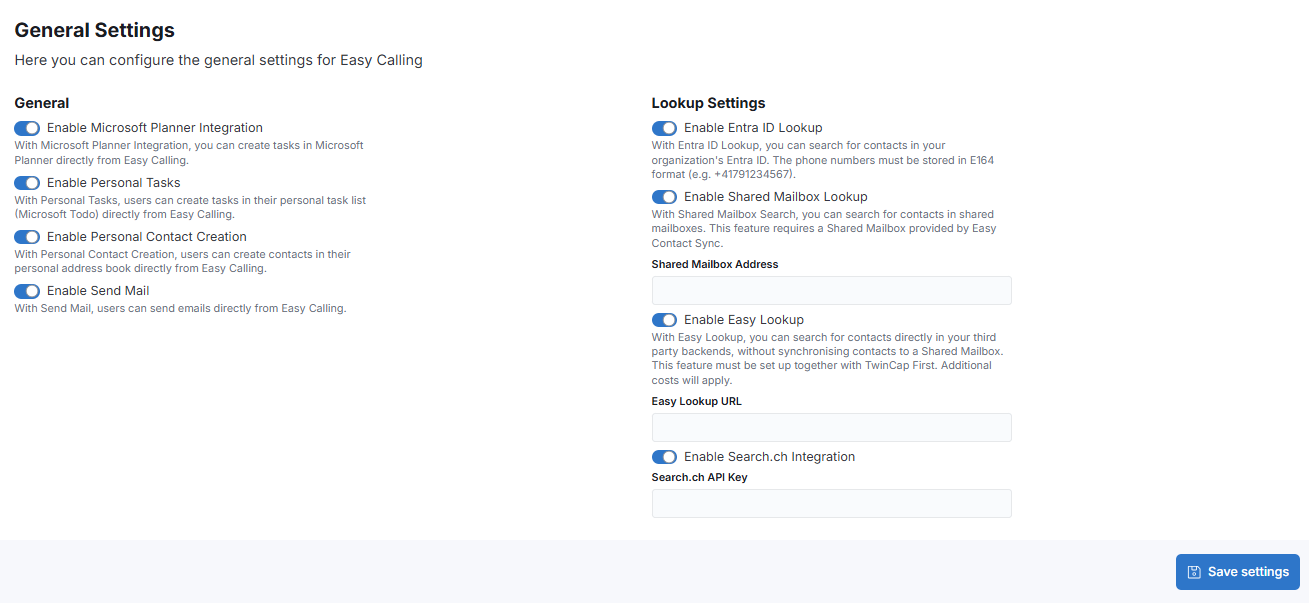
General Settings
#### Enable Microsoft Planner
This feature allows you to connect your Easy Calling with your Microsoft Planner. This gives you the option of creating an entry in the Microsoft Planner at the touch of a button, which takes over all the information from the Easy Calling
#### Enable Personal Tasks
With Personal Tasks, users can create tasks in their personal task list (Microsoft Todo) directly from Easy Calling.
#### Enable Perosnal Contact Creation
With Personal Contact Creation, users can create contacts in their personal address book directly from Easy Calling.
#### Enabel Send Mail
With Send Mail, users can send emails directly from Easy Calling.
#### Enable Entra ID Lookup (Name Resolution)
With Entra ID Lookup, you can search for contacts in your organization's Entra ID. The phone numbers must be stored in E164 format (e.g. +41791234567).
{% hint style="danger" %}
The phone number must be stored in Entra in the format E164 so that this integration works properly:
+41XXXXXXXXX | +49XXXXXXXXXXX | etc.
{% endhint %}
#### Enable Shared Mailbox Search Lookup (Name Resolution)
Enabling the Shared Mailbox Search enables us to search for telephone numbers of incoming calls in a shared mailbox. The search is just supported in mailboxes that are handled by Easy Contact Sync. If there is an existing contact in your tenant with a matching telephone number, the bot will display the contact information in the call card.
{% hint style="danger" %}
The "Easy Contact Sync" product is required for this feature
{% endhint %}
#### Enable Easy Lookup (Name Resolution)
With Easy Lookup, you can search for contacts directly in your third party backends, without synchronising contacts to a Shared Mailbox.
{% hint style="danger" %}
**This feature must be set up together with TwinCap First. Additional costs will apply.**
{% endhint %}
#### Enable Search.ch Integration (Name Resolution)
Enabling the Search.ch Integration enables us to search for telephone numbers of incoming calls in Search.ch. If there is an existing contact in your tenant with a matching telephone number, the bot will display the contact information in the call card.
{% hint style="warning" %}
Please note, that you need your own API Key, to search against Search.ch. You can get an API Key for free directly from Search.ch
{% endhint %}
## Voice App Configuration
The voice app configuration is the core component of Easy Calling. It enables the complete setup and management of the telephony infrastructure.
{% tabs %}
{% tab title="Create and configure a voice app" %}
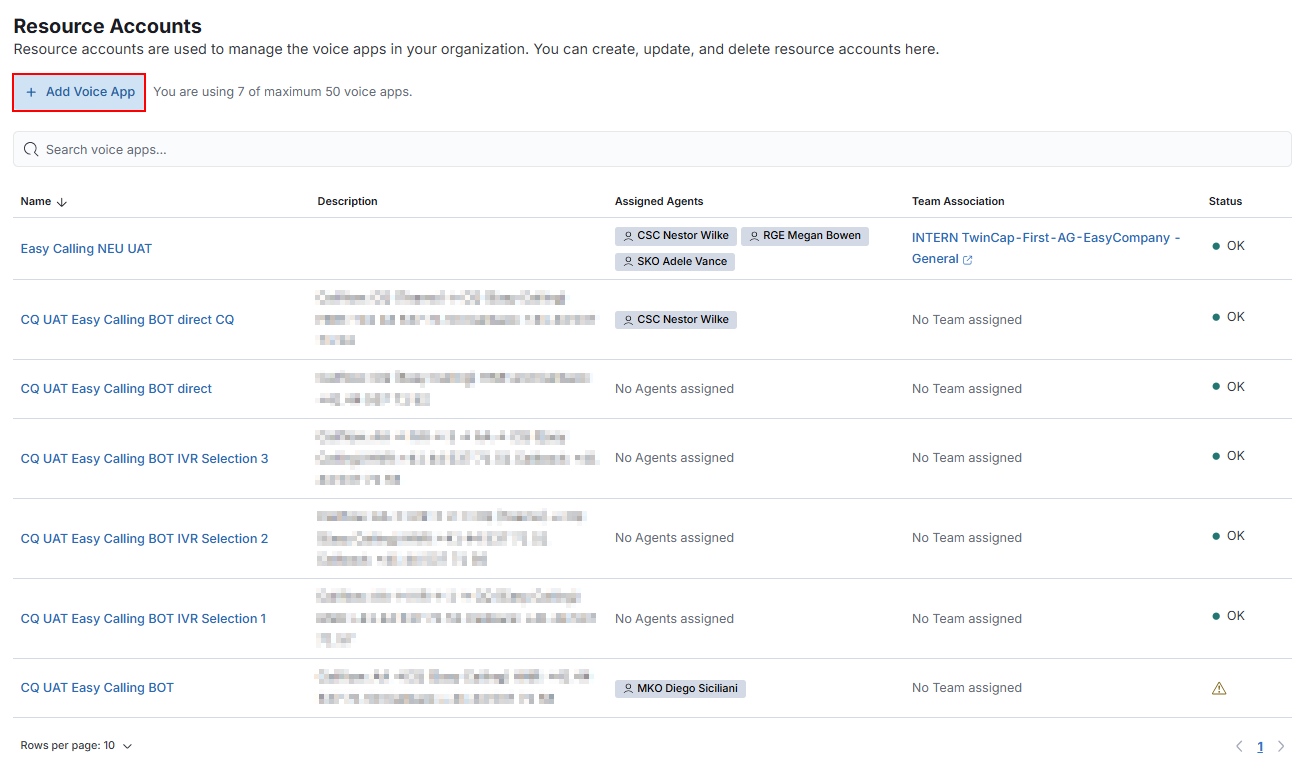
1. Click "Add Voice App"
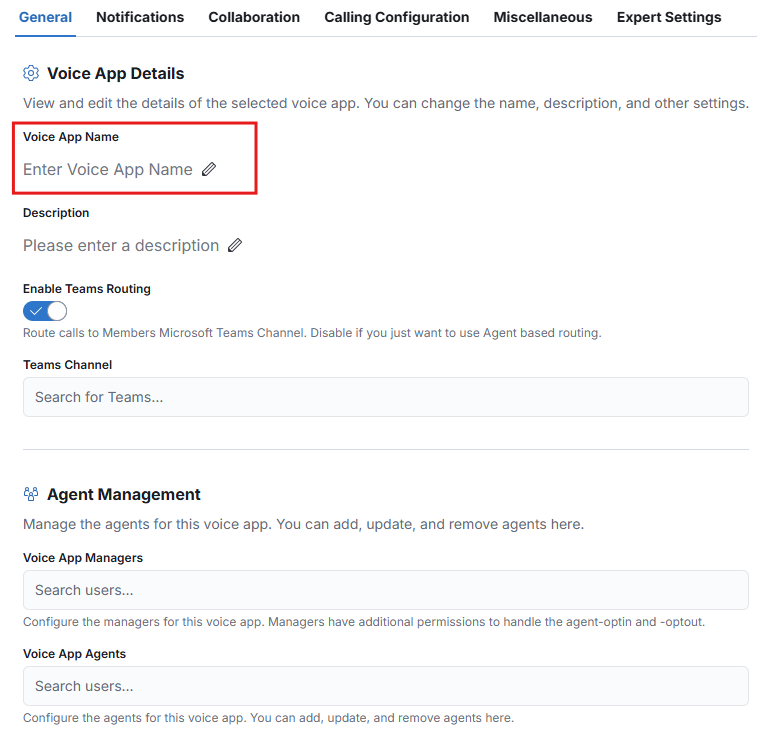
2. Define a name for this voice app
{% hint style="warning" %}
This name will later be used to automatically create a resource account in the Microsoft Teams Admin Center.
{% endhint %}
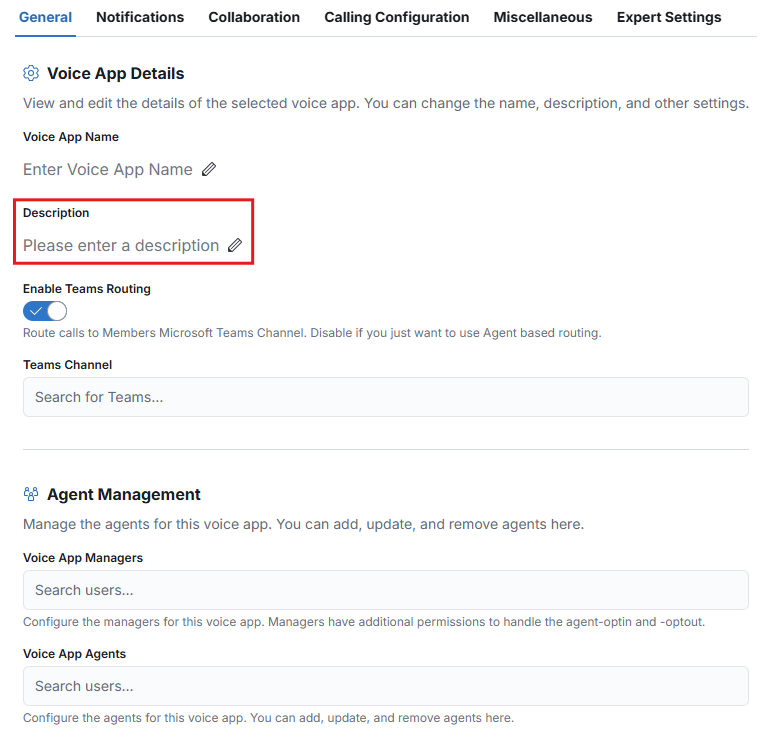
3. Optional: You can add an individual description to this voice app
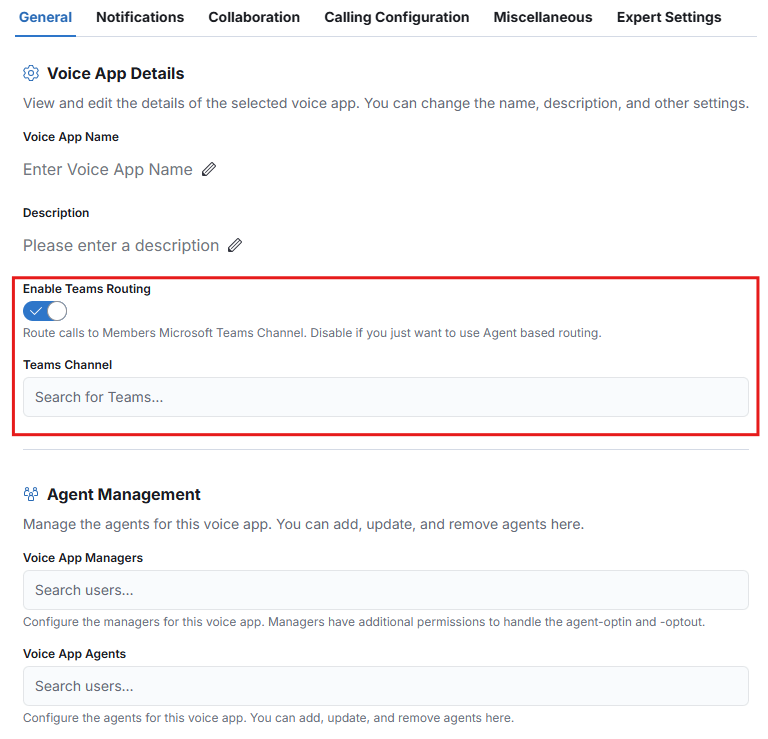
4. Choose between **Teams routing** and **agent routing**
**Team Routing:**
In Teams Routing, you can select an existing team in Microsoft Teams and all users within this team will receive the calls
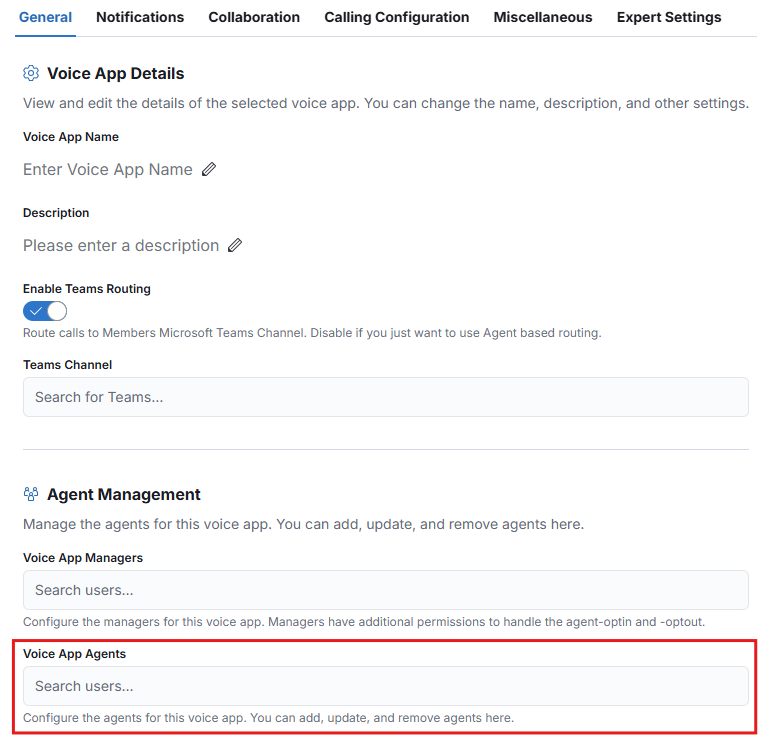
**Agent routing:**
In Agent routing, select the individual users who are to receive the call
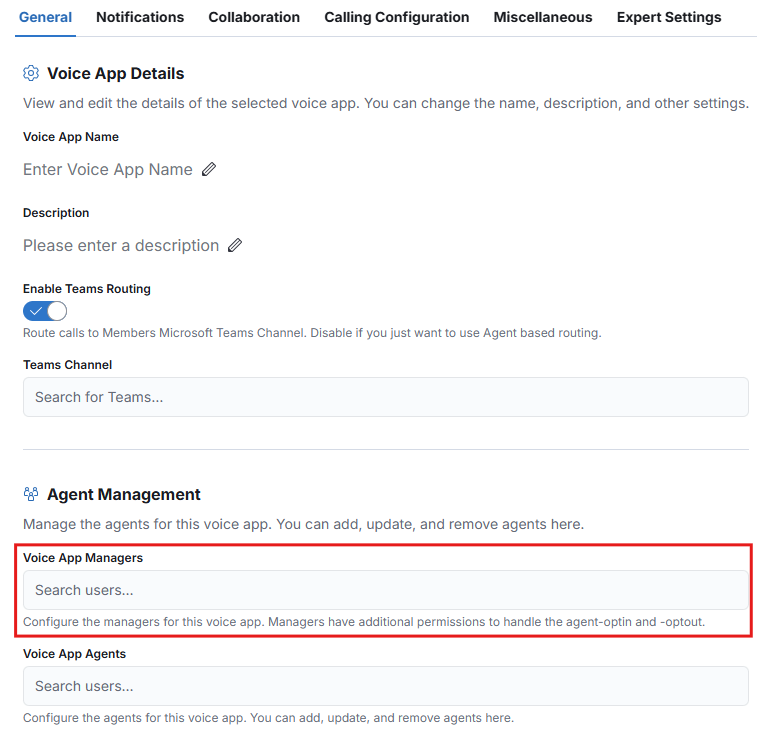
5. Selecting the Voice App Manager
The Voice App Manager has the additional right to determine which agents are active within this Voice App. The call will then ring for these agents (agent opt in/out). At the same time, the Voice App Manager can carry out individual configurations such as changing an announcement text
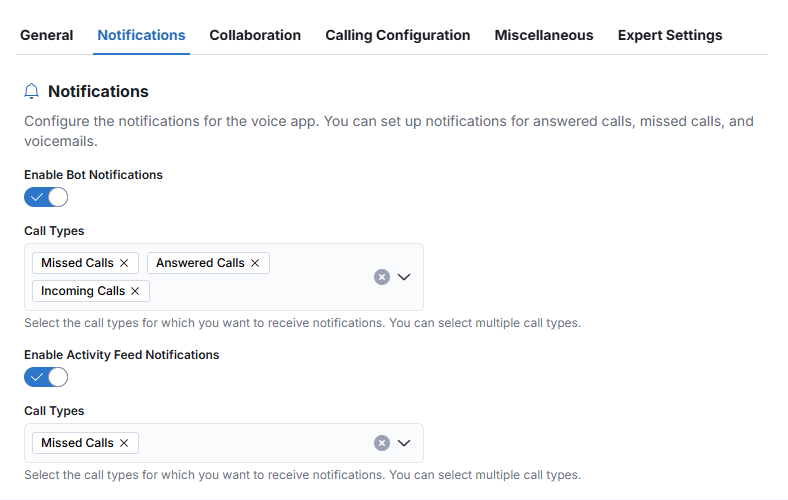
6. Select how and for what you would like to receive a notification for a call
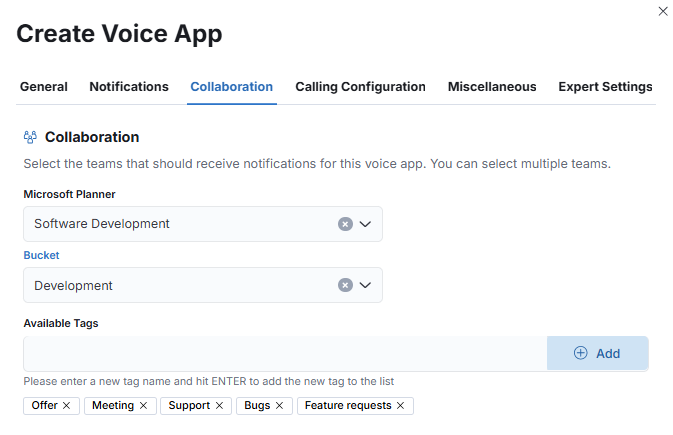
7. Create individual tags to categorize your calls and select your Microsoft Planner
{% hint style="warning" %}
**Teams Routing** must be activated in order to activate the Microsoft Planner
{% endhint %}
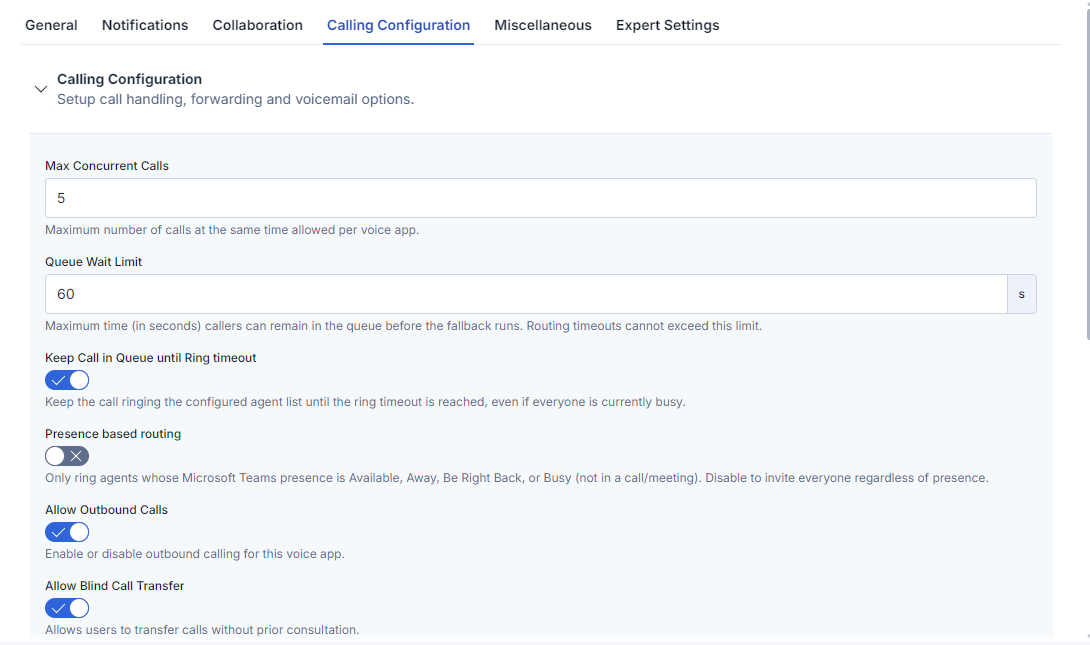
8. **Calling Configuration**: Define how many callers can be in the queue at the same time and how long it should ring before the call will be forwarded. Additional settings:\
\- Keeping a call in the queue until timeout even if no agent is available\
\- Observe Teams presence status of agents-\
\- Allow outbound calls\
\- Allow blind transfer
9. **Audio Configuration:** Create a welcome message with the help of “Text to Speach” or upload an audio file\\
Record a waiting music or upload an audio file
{% hint style="warning" %}
All audio file formats are automatically formatted in **.wav** format
{% endhint %}
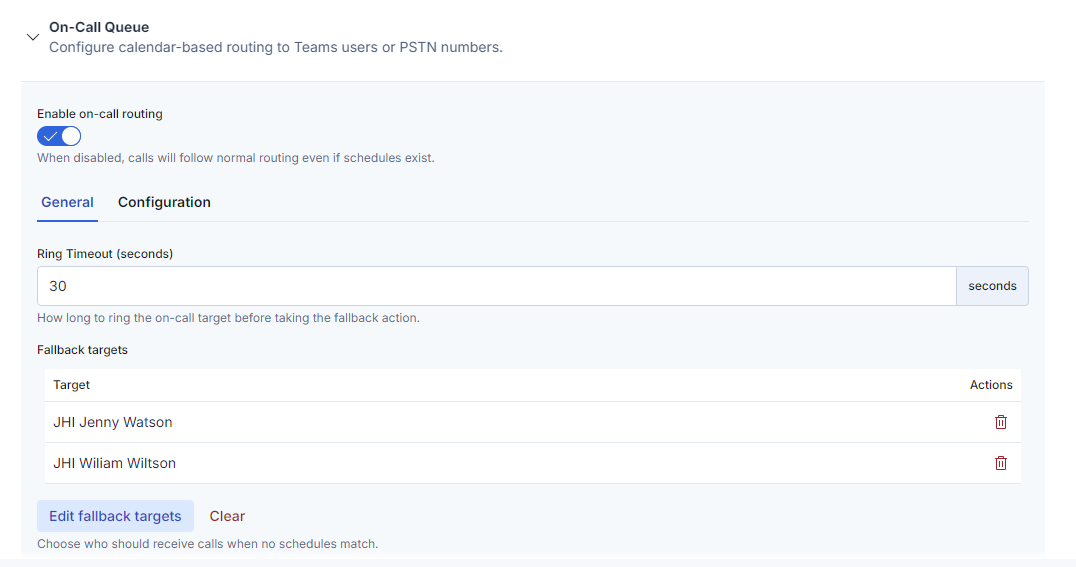
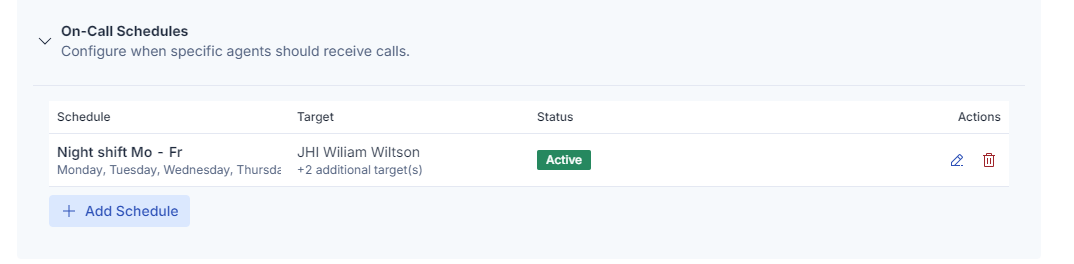
10. **On-Call Queue:** Configure calendar-based routing to Teams or PSTN numbers.
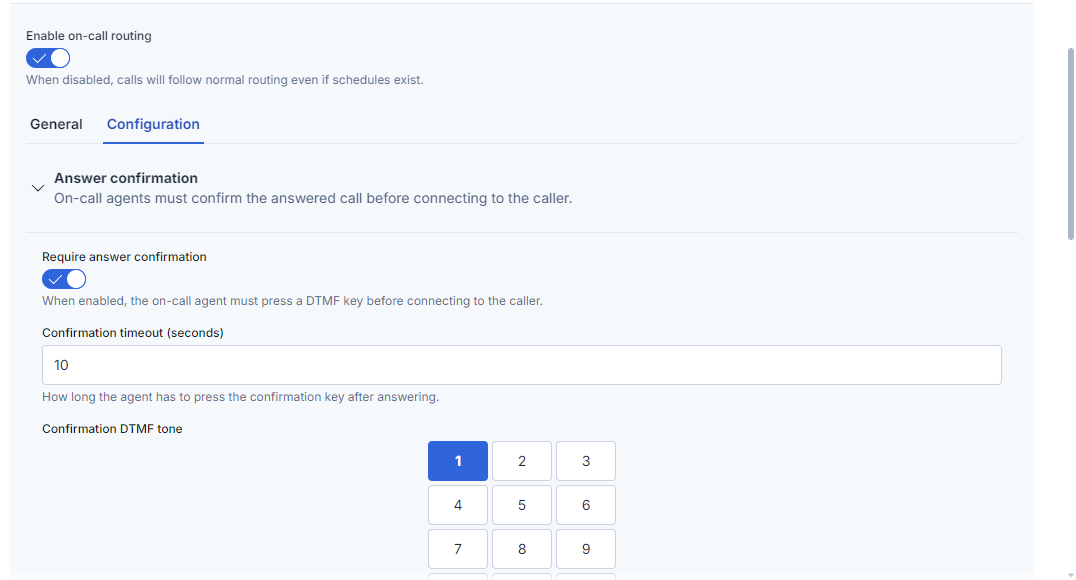
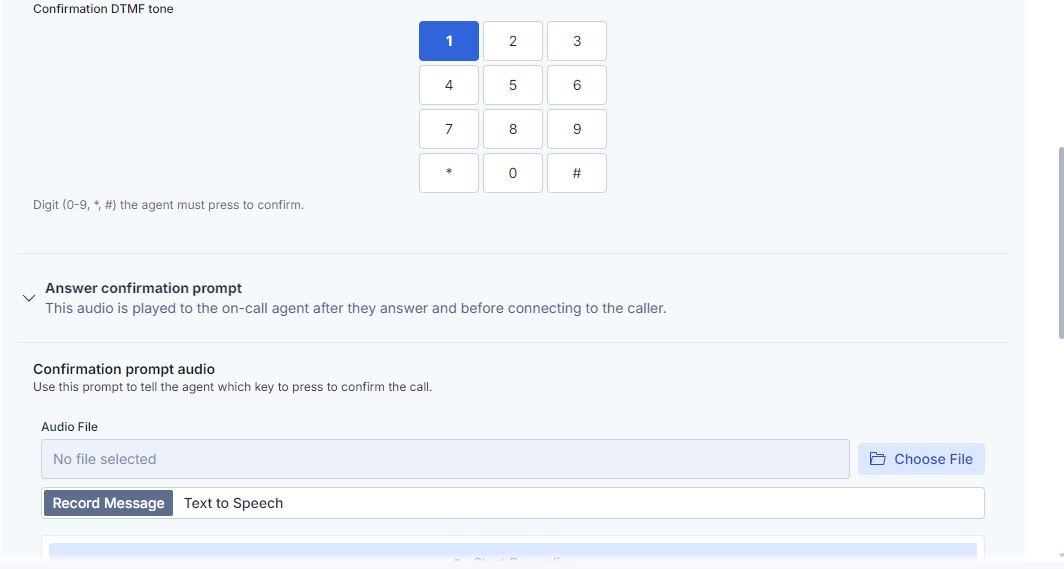
**Configuration**, Answer confirmation. Let the agent confirm that he/she will take care of the call by pressing a pre-defined confirmation key. playback a confirmation message.
Configure Audio and Voicemail settings
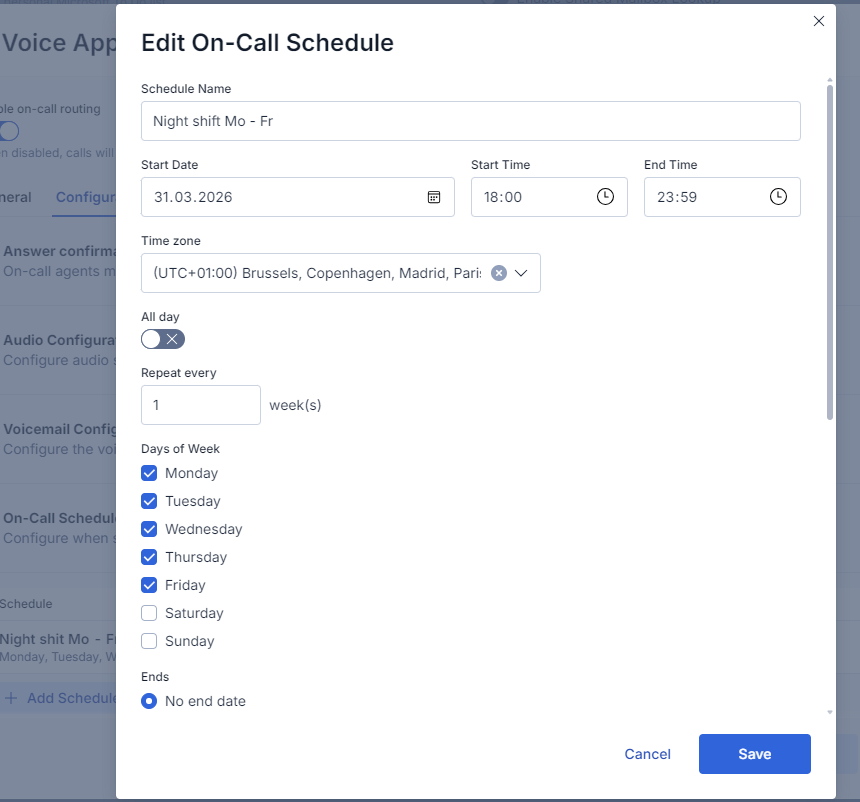
Create on-call schedules. Define when the on-call actions have to be active.
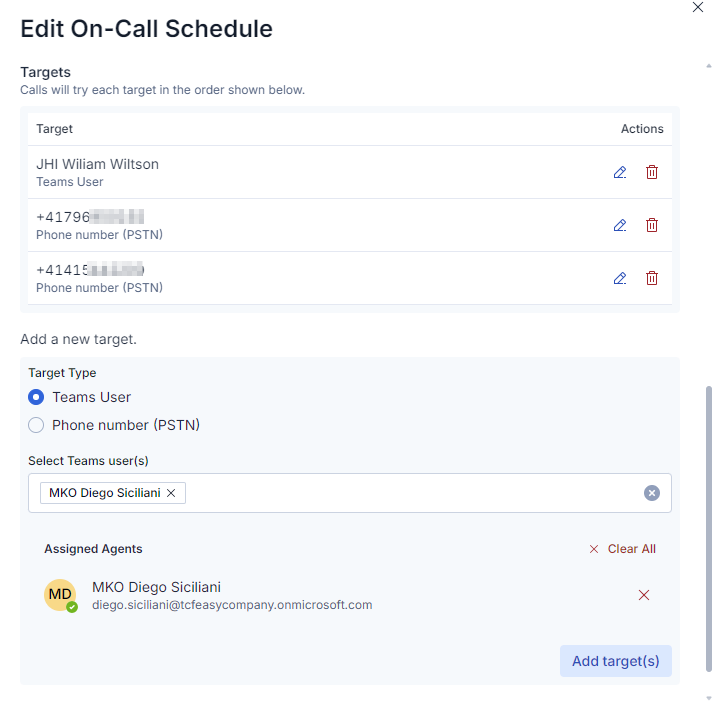
Add targets to be called when the schedule is active
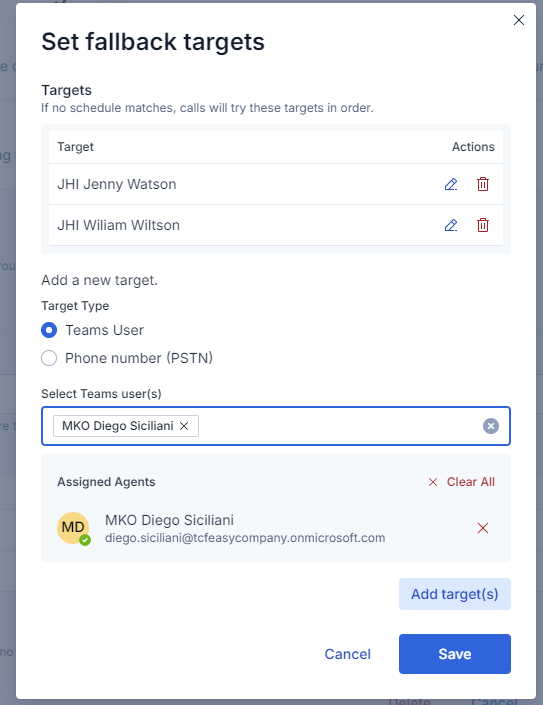
Fallback. Add targets (internal users or external numbers) if no schedule is configured
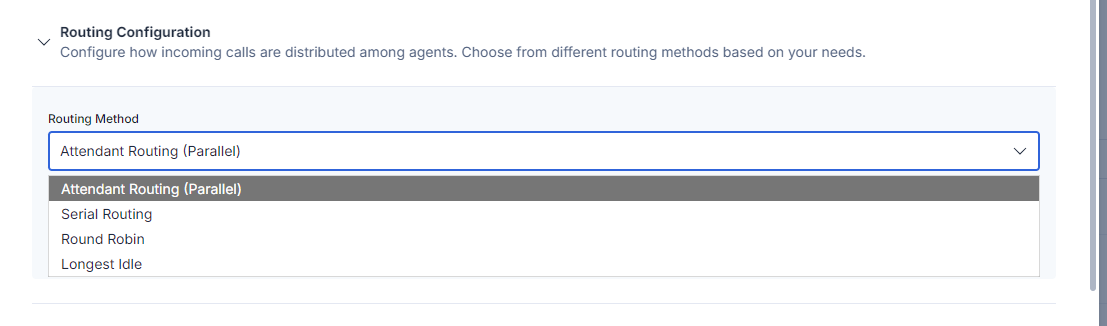
10. **Routing Configuration:** Define how the calls are distributed among the available agents\
\- Attendant Routing (Parallel)\
\- Serial Routing\
\- Round Robin\
\- Longest idle
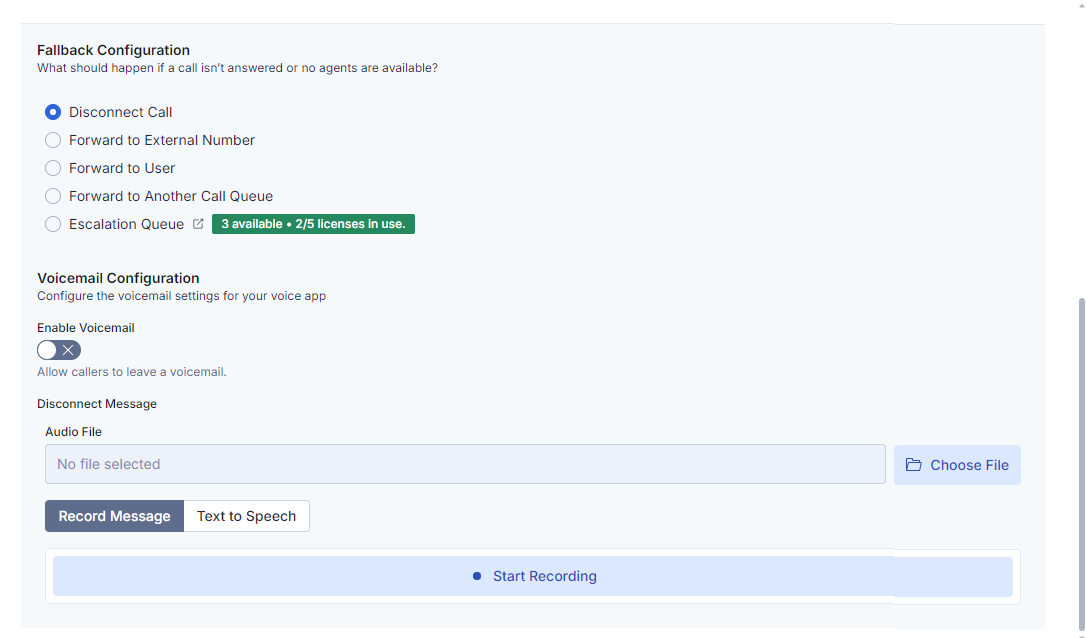
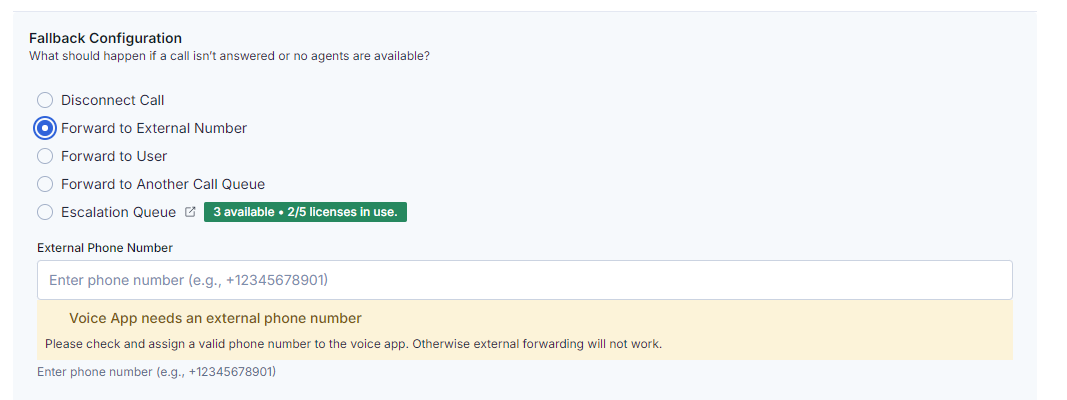
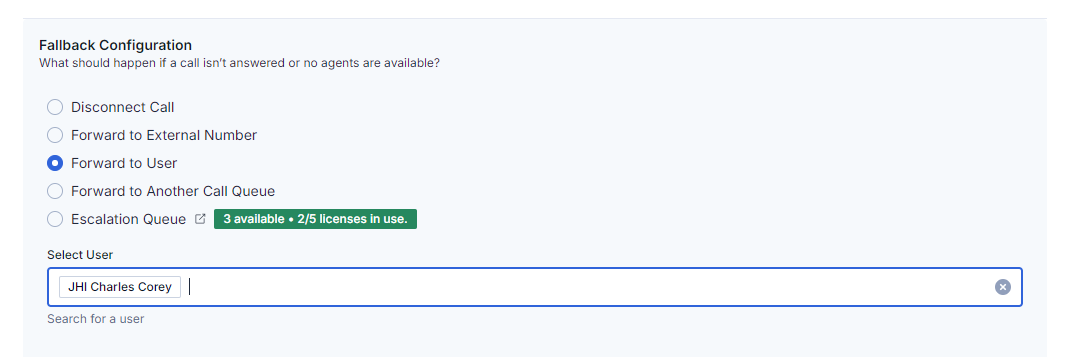
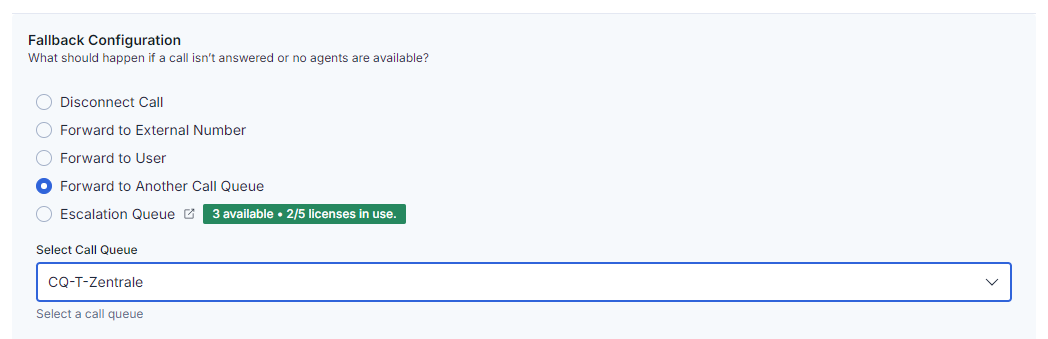
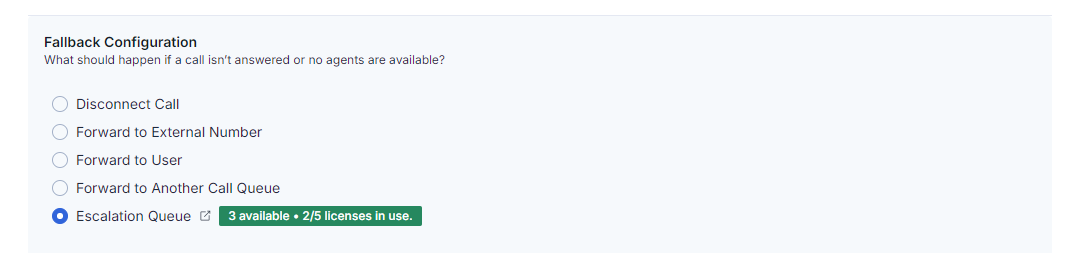
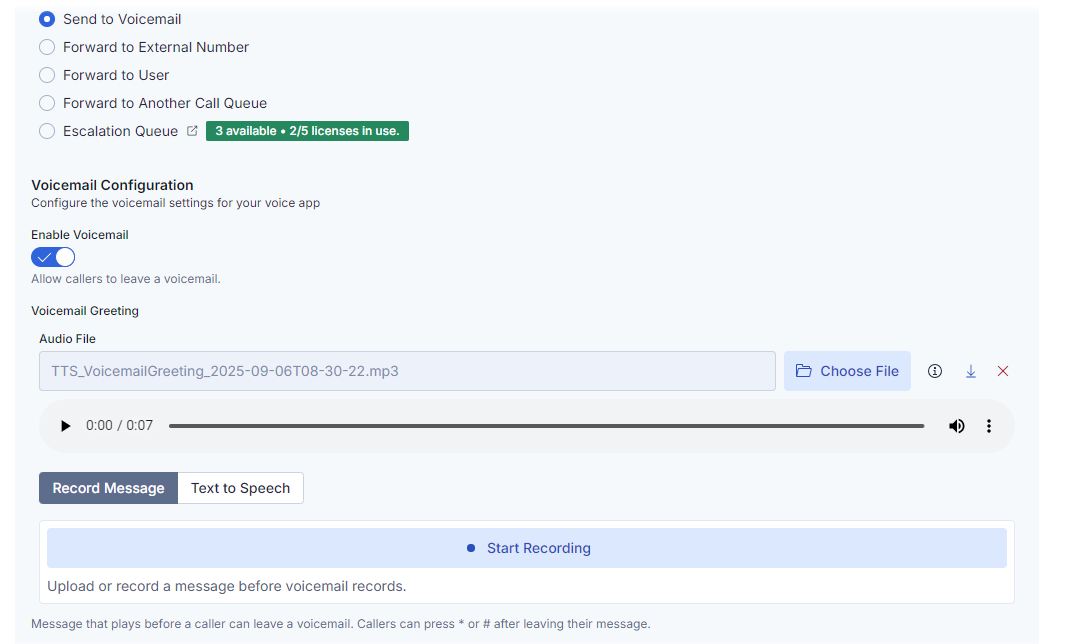
11. **Fallback Configuration:** Define what should happen to the call if no user answers the call
**Disconnect Call:** The call is terminated. Add disconnect message.
**Forward to external number:** add E164 formatted number to forward to an external target number
{% hint style="danger" %}
**The resource account must have a phone number and a Voice Routing Policy for forwarding to an external phone number to work**
This number and policy must be carried out using the following PowerShell commands
```
Connect-MicrosoftTeams
Set-CsPhoneNumberAssignment -Identity "" -PhoneNumber "" -PhoneNumberType DirectRouting
Grant-CsOnlineVoiceRoutingPolicy -Identity "" -PolicyName ""
```
{% endhint %}
**Forward to user:** The call is forwarded to a specific user
**Forward to Another Call Queue**: select from available, fully Easy Calling licensed queues
{% hint style="warning" %}
Only call queues created by Easy Calling can be selected
{% endhint %}
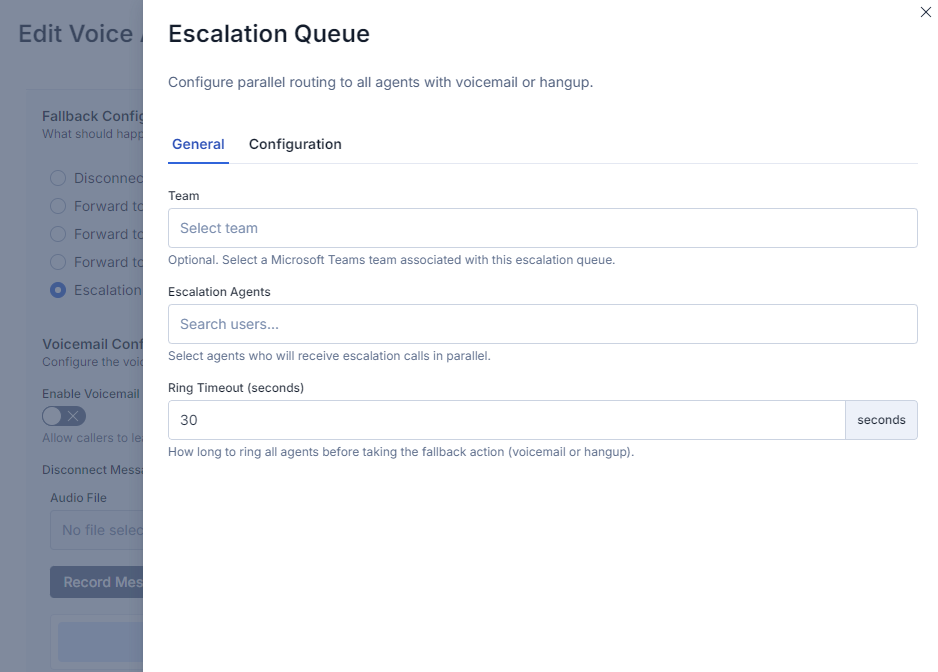
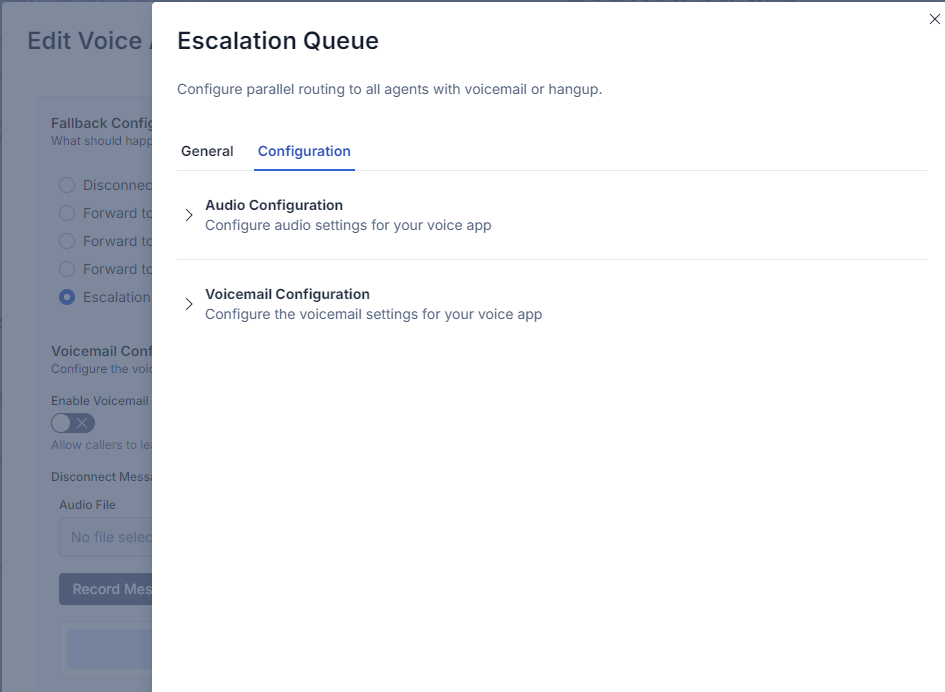
**Escalation Queue**: Configure additional queue details. this is a chargeable add-on that needs to be licensed separately.
Set escalation agents and final ring timeout
Set Audio and Voicemail configuration to be used when final timeout is reached
**Send to Voicemail:** The call is forwarded to voicemail
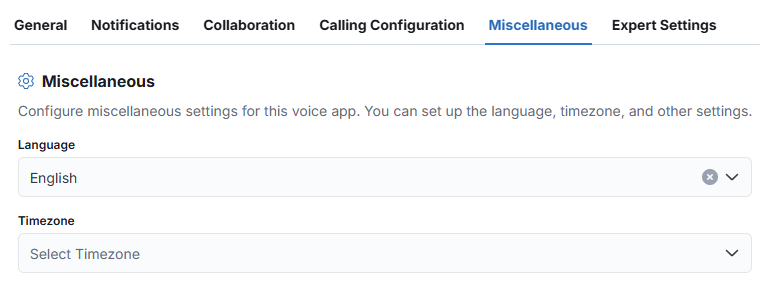
11. Select the language and time zone
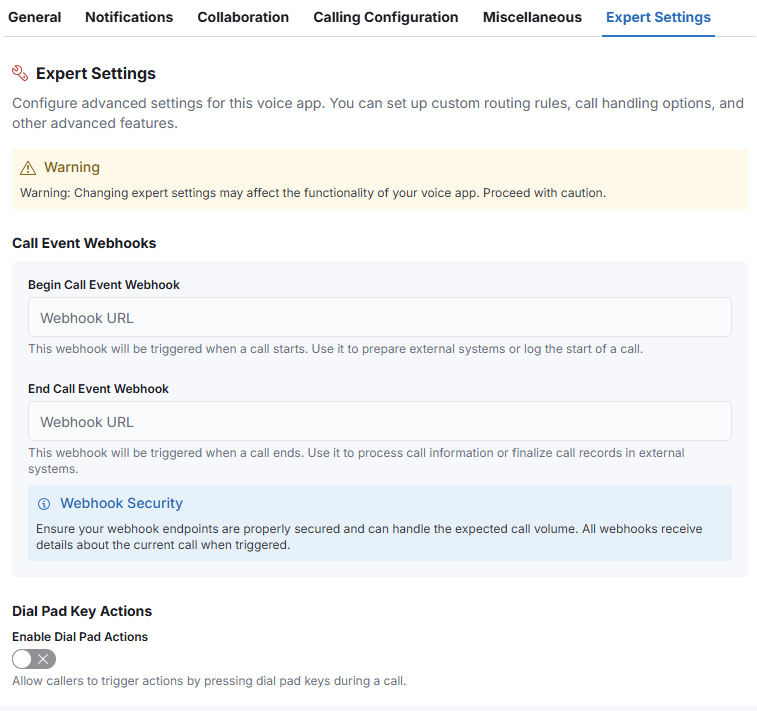
12. Optional: Expert Settings
{% hint style="danger" %}
The Expert settings are used for special situations where you can send various events via a webhook. These settings can affect the entire voice app if configured incorrectly
{% endhint %}
{% hint style="success" %}
You have now successfully created a voice app in Easy Calling.
{% endhint %}
{% endtab %}
{% endtabs %}
{% hint style="danger" %}
Now take a look at the steps you need to take in the [Microsoft Teams Call Flow](broken://pages/Yq3MXT9Z66wT8mISjJ74)
{% endhint %}