> For the complete documentation index, see [llms.txt](https://docs.easycalling.easyplatform.app/llms.txt). Markdown versions of documentation pages are available by appending `.md` to page URLs; this page is available as [Markdown](https://docs.easycalling.easyplatform.app/getting-started/installation-guide.md).
# Installation Guide (for Admins)
**Getting Easy Calling up and running is easier than you think.** This guide walks you through the complete installation process, step by step.
## Before You Begin
### Who Should Do This Installation?
This guide is for **IT Administrators** or **Teams Administrators** who are responsible for setting up applications in your Microsoft 365 tenant.
### What You'll Need
* **Global Administrator** access to your Microsoft 365 tenant
* **Teams Administrator** rights (to configure call queues)
* **15-20 minutes** of uninterrupted time
* **The Easy Calling app package** (download through the Installation Wizard)
### What You'll Accomplish
By the end of this guide, you'll have:
* Easy Calling installed in your Teams environment
* Permissions configured correctly
* Your first call queue set up and ready to use
* Your team ready to start handling calls
{% hint style="info" %}
**Important:** You'll need to grant administrative consent for Easy Calling to access call information and integrate with Teams. This is a one-time setup.
{% endhint %}
***
## Step 1: Run the Easy Calling Onboarding Wizard
After purchasing your Easy Calling license, you'll receive an email with all instructions. The Easy Calling Onboarding Wizard automates the permission setup.
### Why Do We Need Permissions?
Easy Calling needs specific permissions to:
* **Read call information** from Microsoft Teams (to show you who's calling)
* **Control calls** (answer, transfer, send to voicemail)
* **Send notifications** to your team about incoming calls
* **Create resource accounts** for call queues
These permissions are granted once and apply to your entire organization.
### Starting the Wizard
**1. Open the Installation Link**
{% hint style="info" %}
[**https://admin.easyplatform.app/products/easycalling/onboarding**](https://admin.easyplatform.app/products/easycalling/onboarding)
{% endhint %}
**2. Sign In with Your Admin Account**
When prompted, sign in with your **Global Administrator** account.
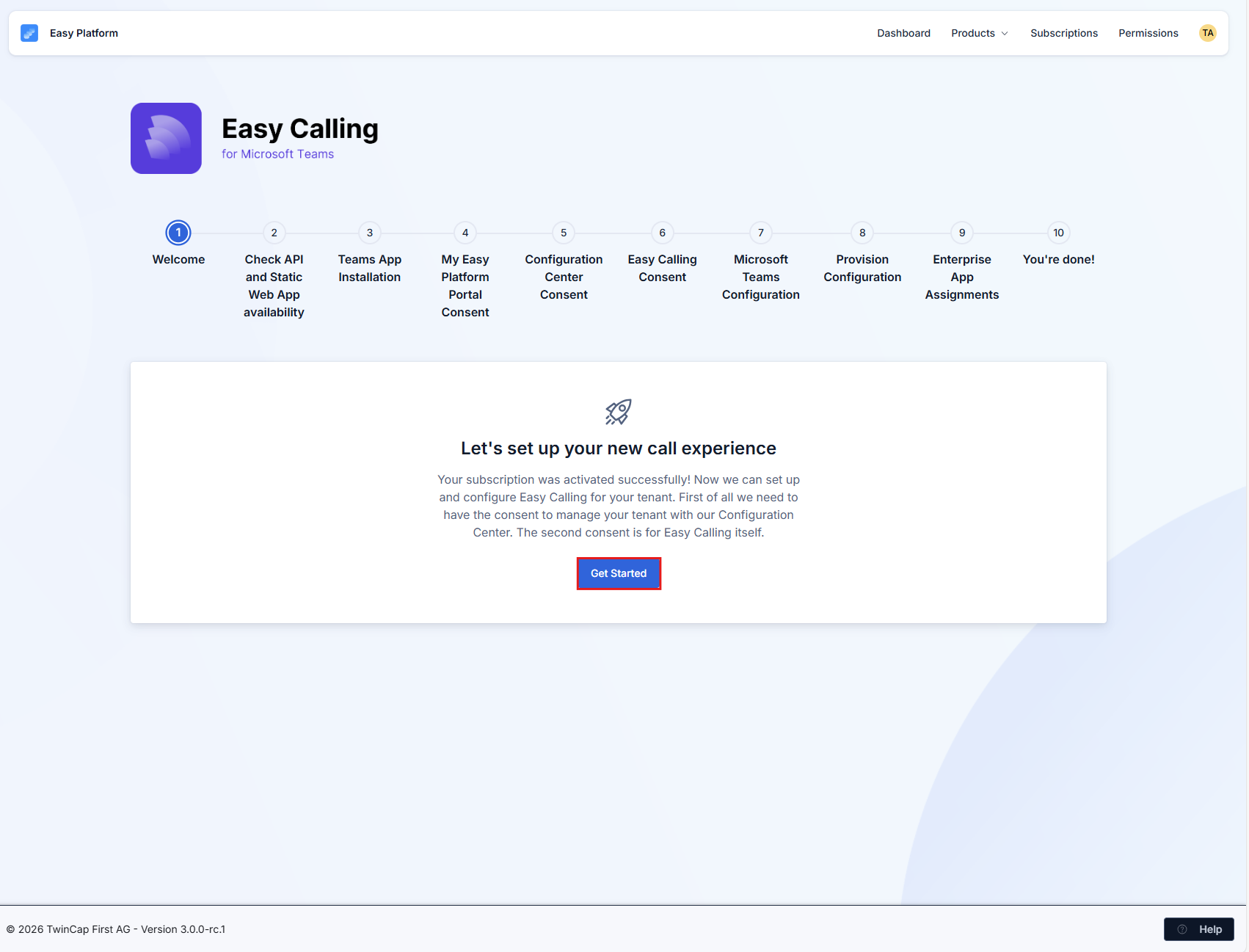
**3. Click "Get Started"**
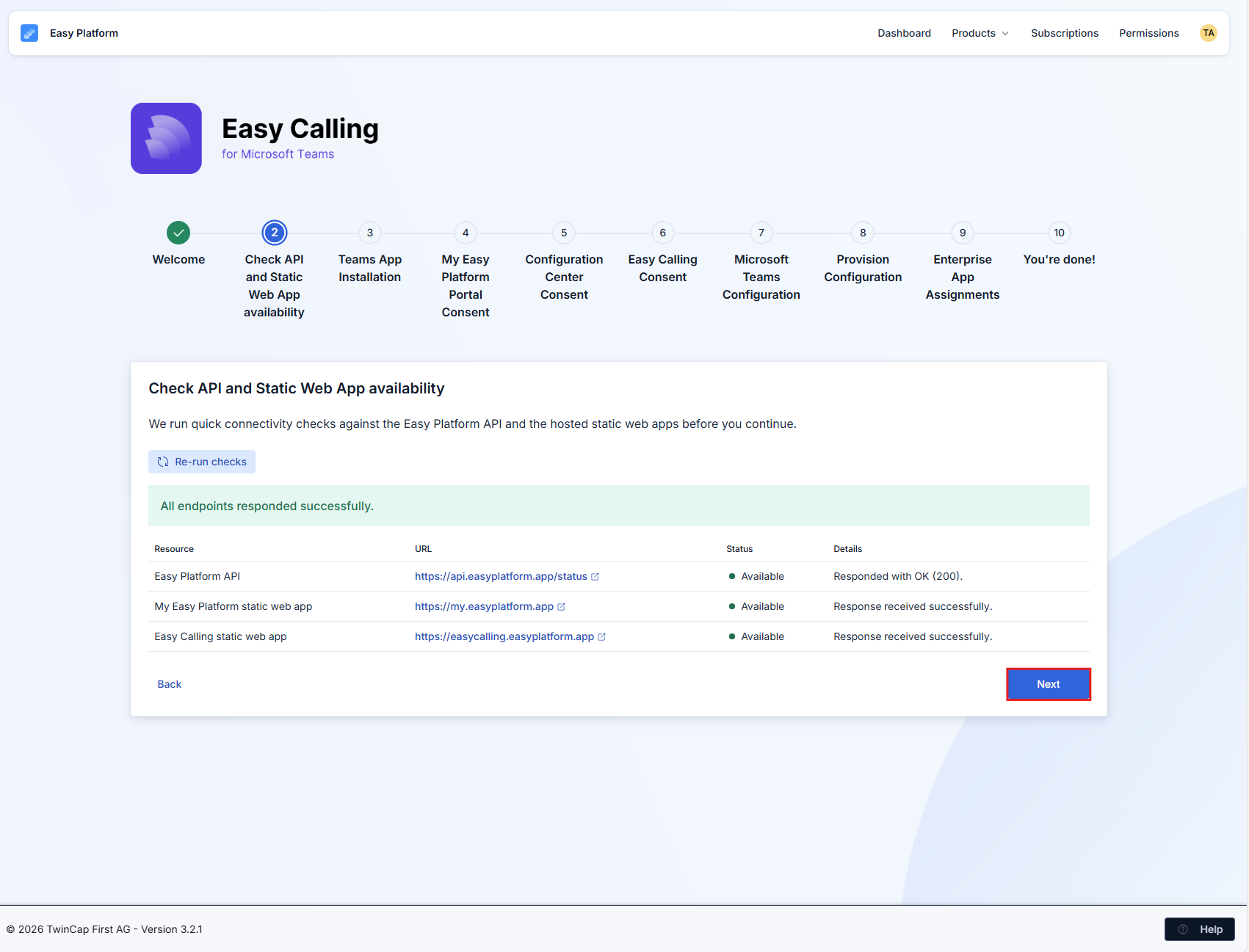
4. **The system will now check whether the required endpoints are accessible and are not blocked by a firewall, for example. If everything is accessible, you can click "Next."**
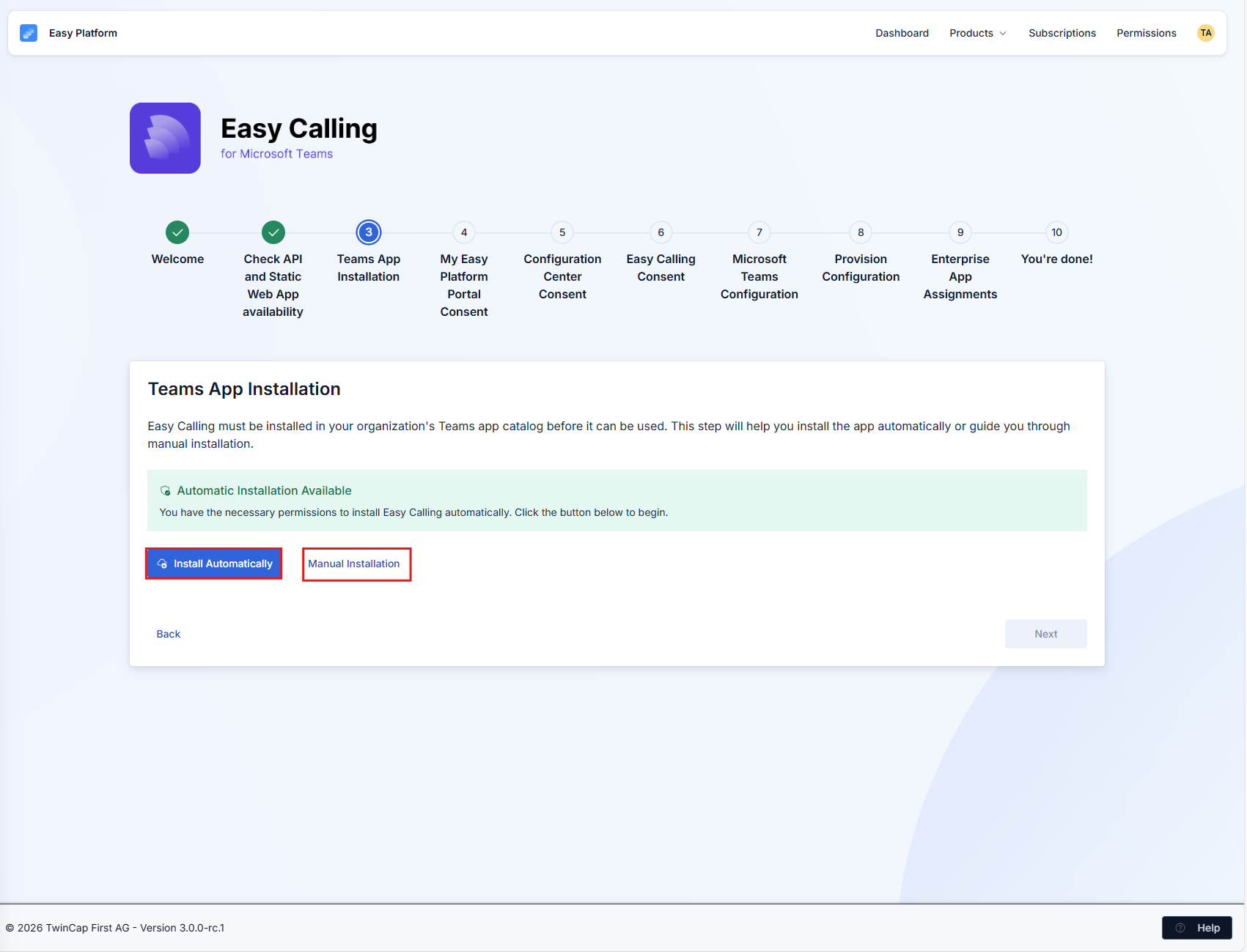
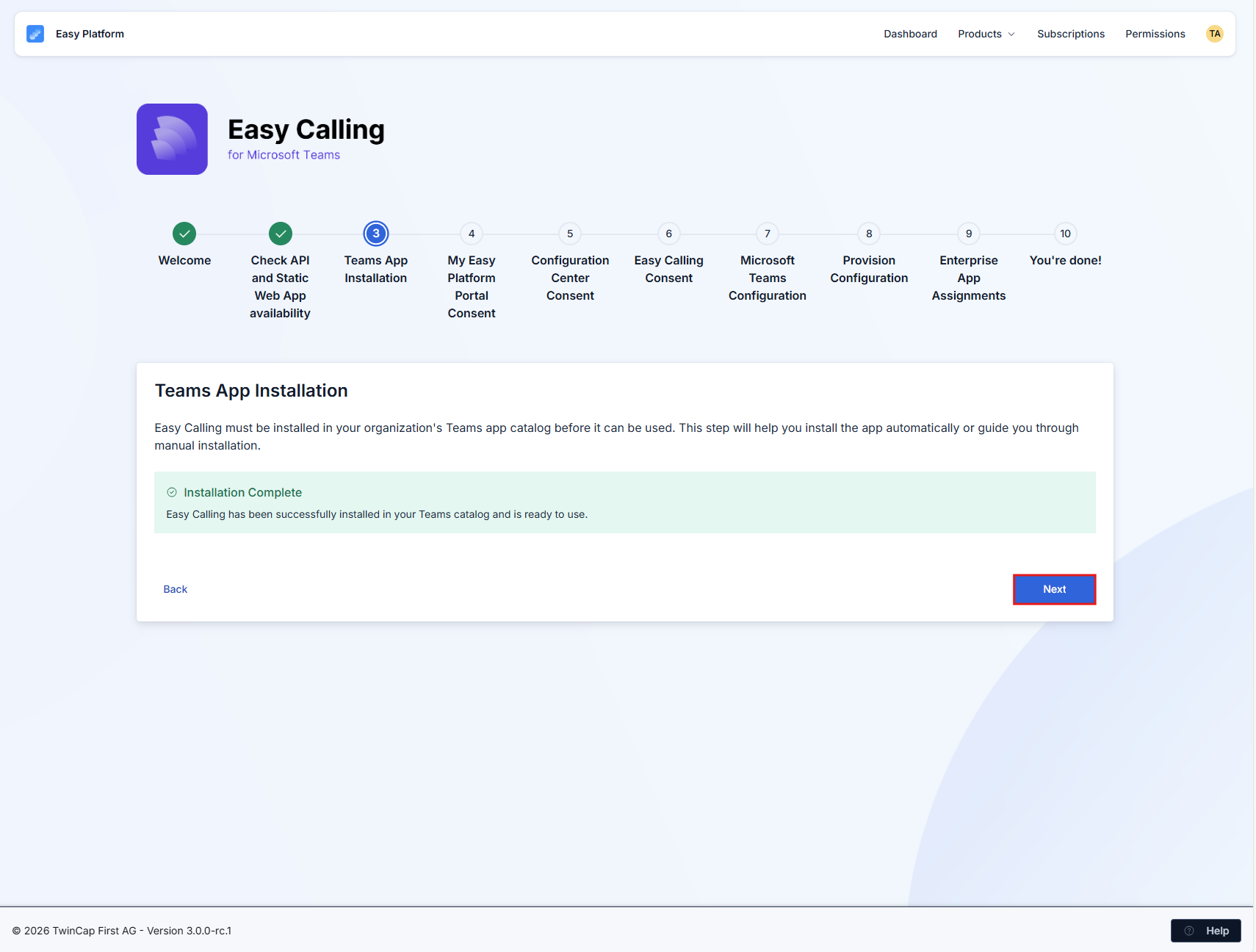
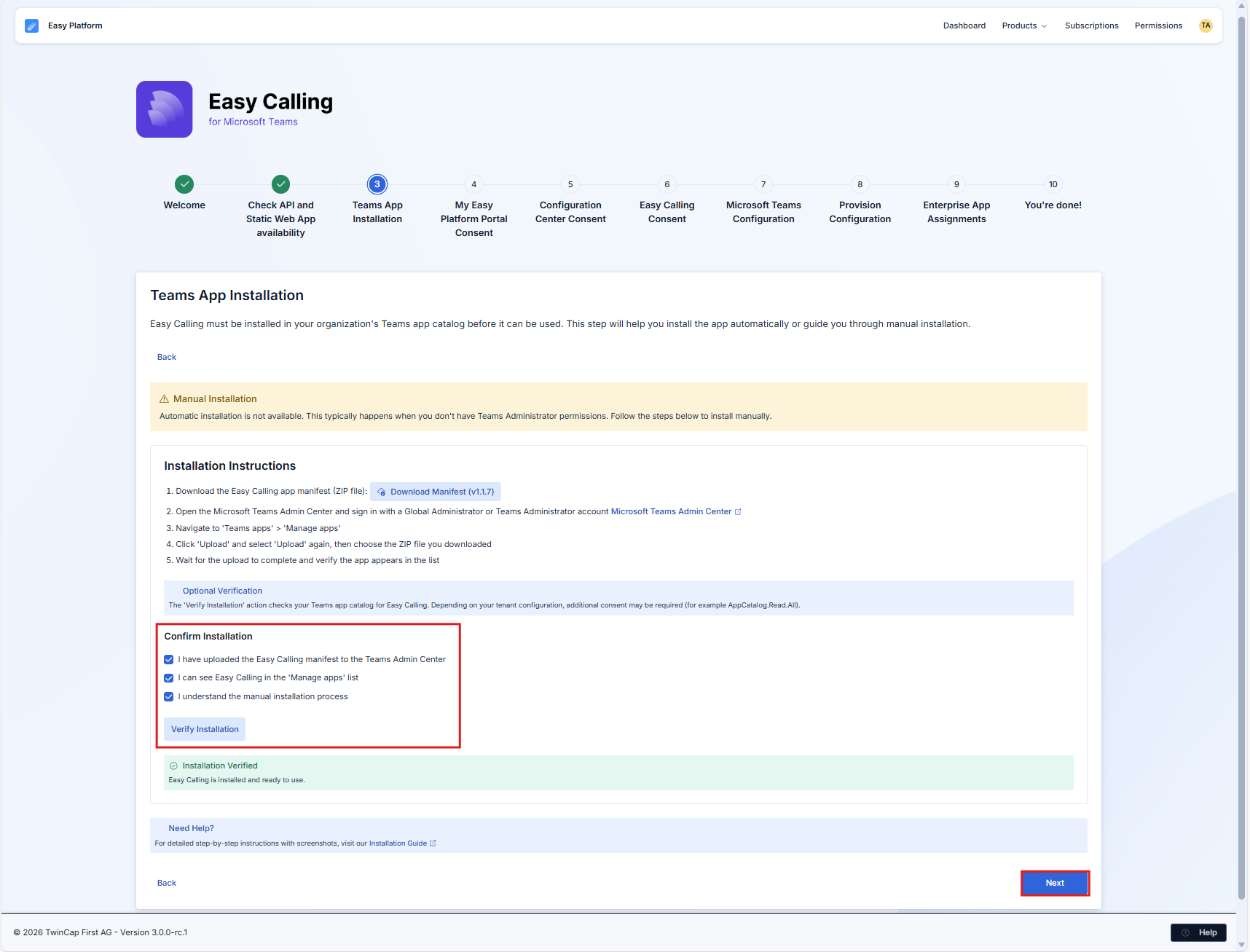
5. **If you skipped Step 2, you can choose here to have the manifest installed automatically or to install it manually. Once the installation is complete, you can click "Next"**
**Automatically:**
**Manual:**
***
## Step 2: Grant Permissions (Important!)
The wizard will guide you through granting several permissions. Don't worry–we'll explain what each one does.
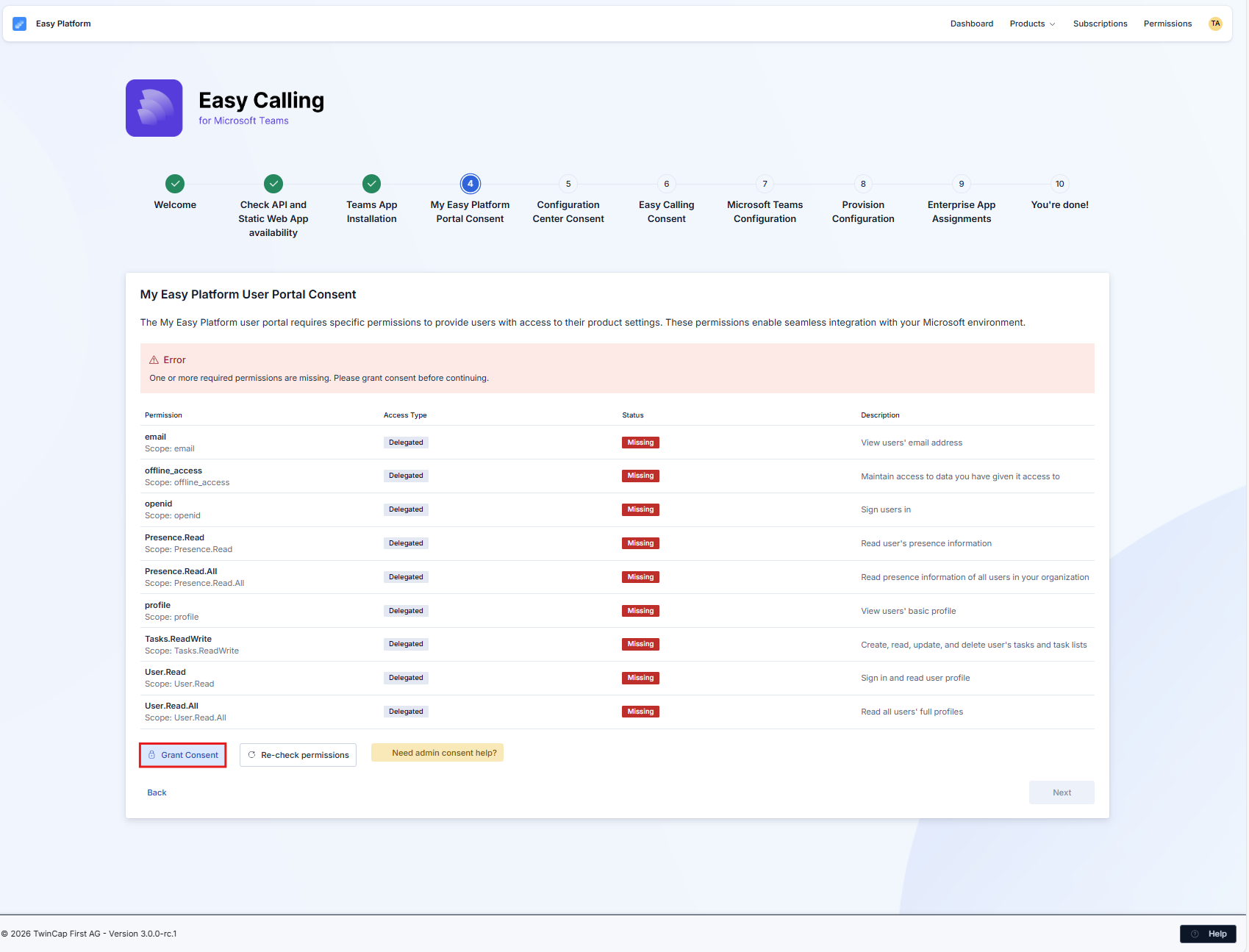
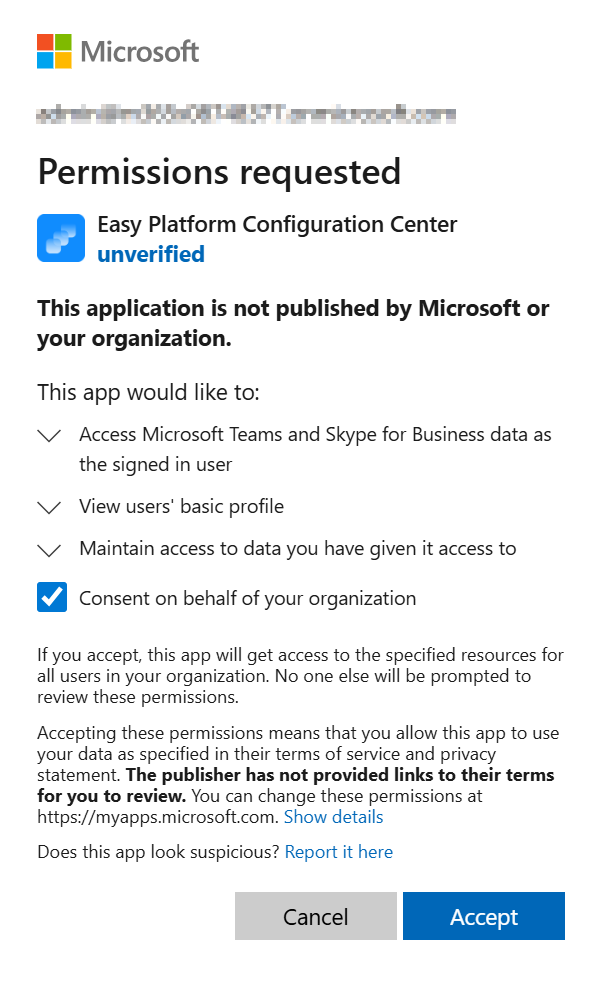
### Permission 1: User Settings (My Easy Platform)
**What it does:** Allows Easy Platform to read your users' profiles so it can show agent names and availability.
**What to do:**
1. Click the **"Grant Consent"** button
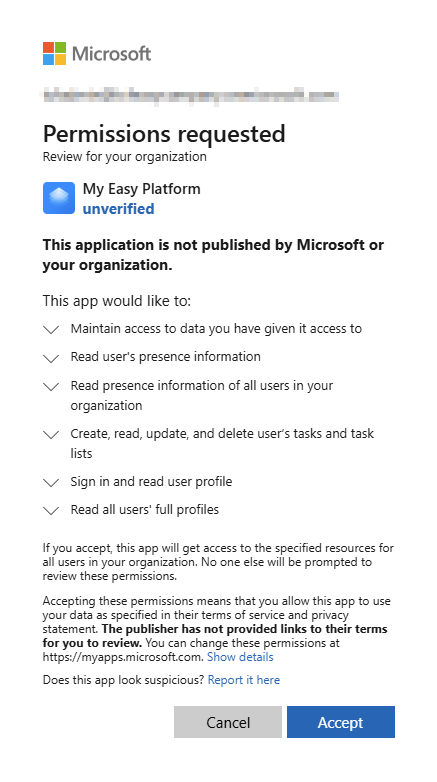
2. A Microsoft permission dialog will appear
3. Sign in with your **Global Administrator** account
4. Review the permissions (they're all read-only)
5. Click **"Accept"**
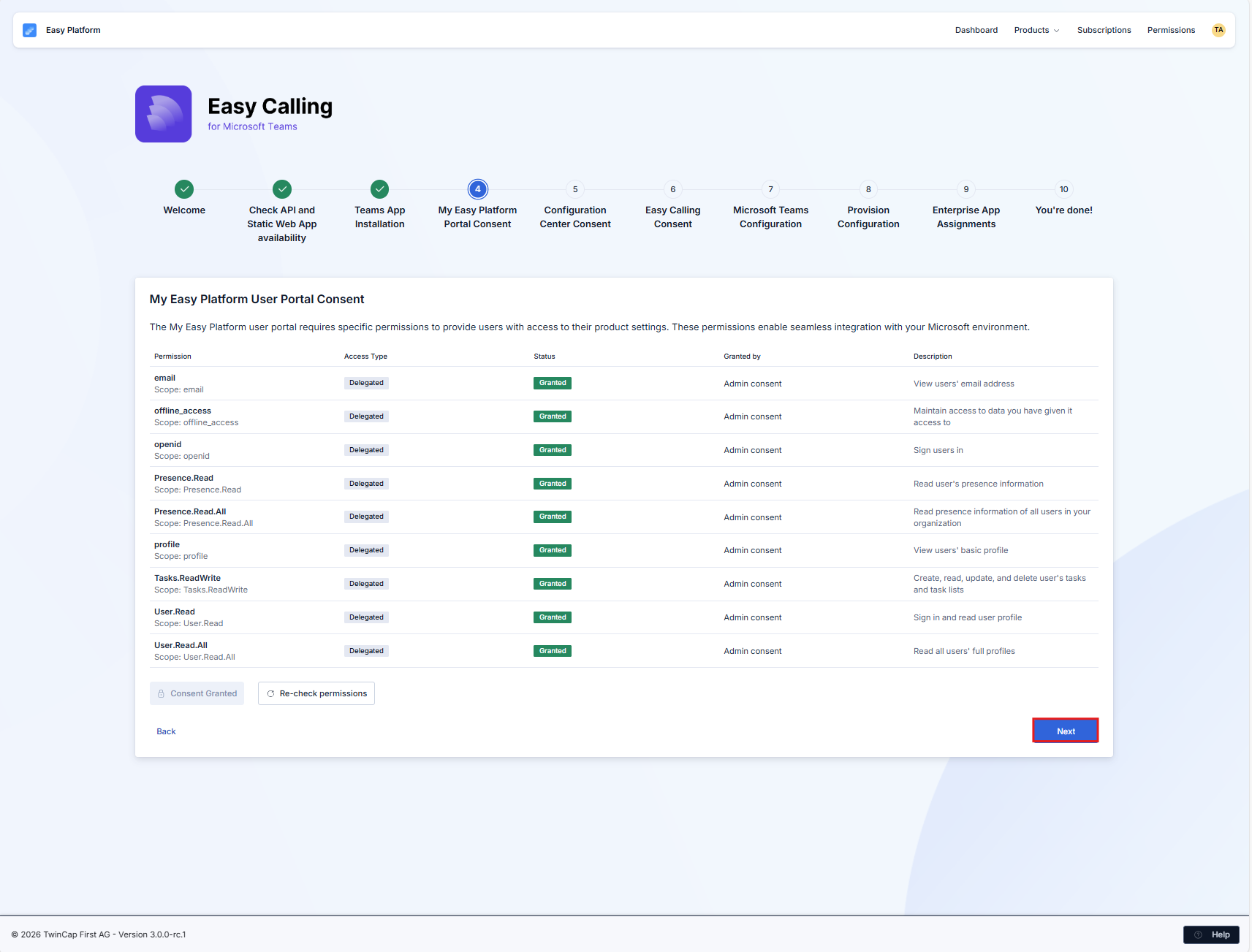
If validation succeeds, click **"Next"** If validation fails, try granting consent again
***
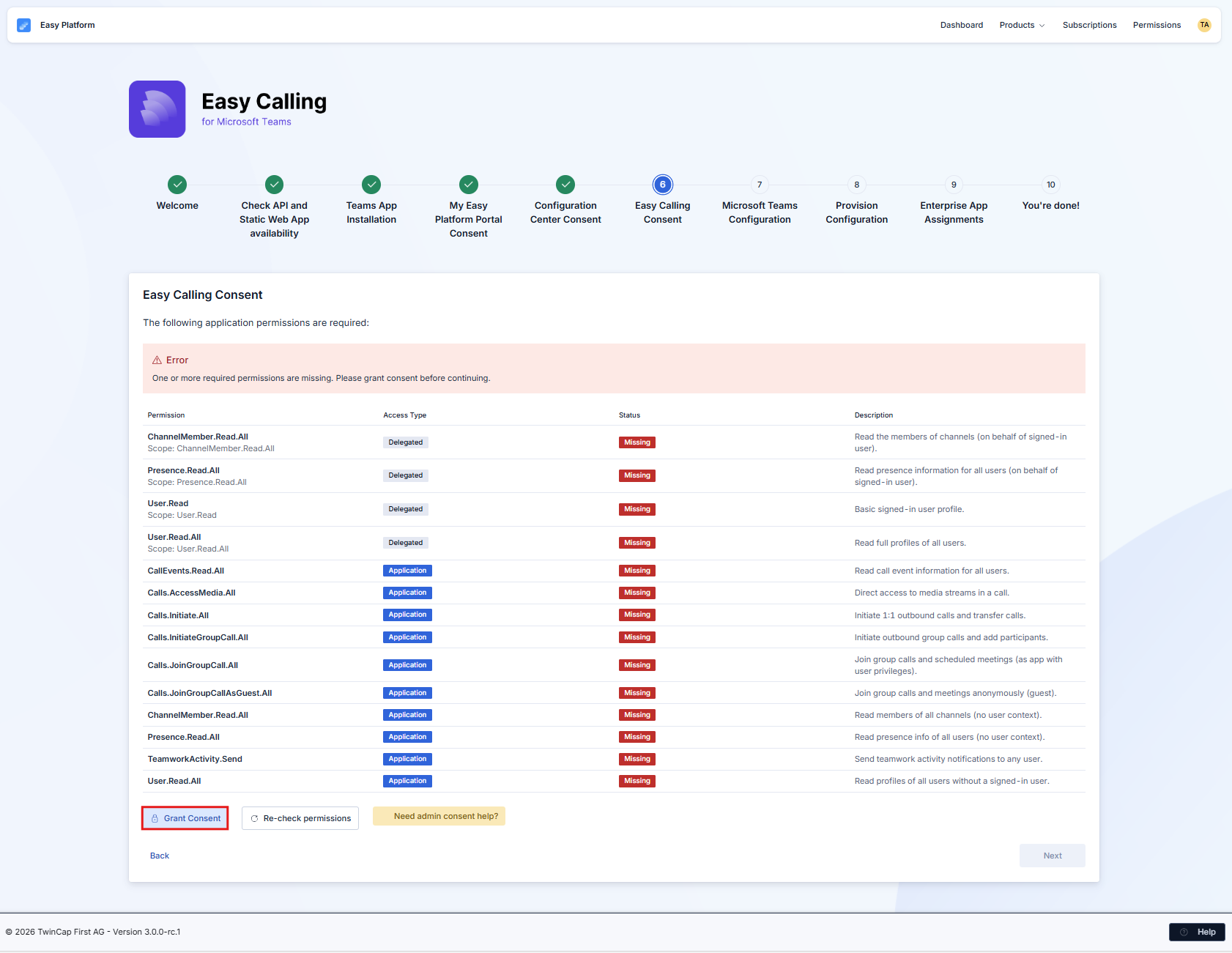
### Permission 2: Easy Platform (Application Access)
**What it does:** Allows the Easy Platform backend to create and manage call queues on your behalf.
**What to do:**
1. Click the **"Grant Consent"** button
2. Sign in with your **Global Administrator** account (if prompted)
3. Review the permissions
4. Click **"Accept"**
If validation succeeds, click **"Next"** If validation fails, try granting consent again
***
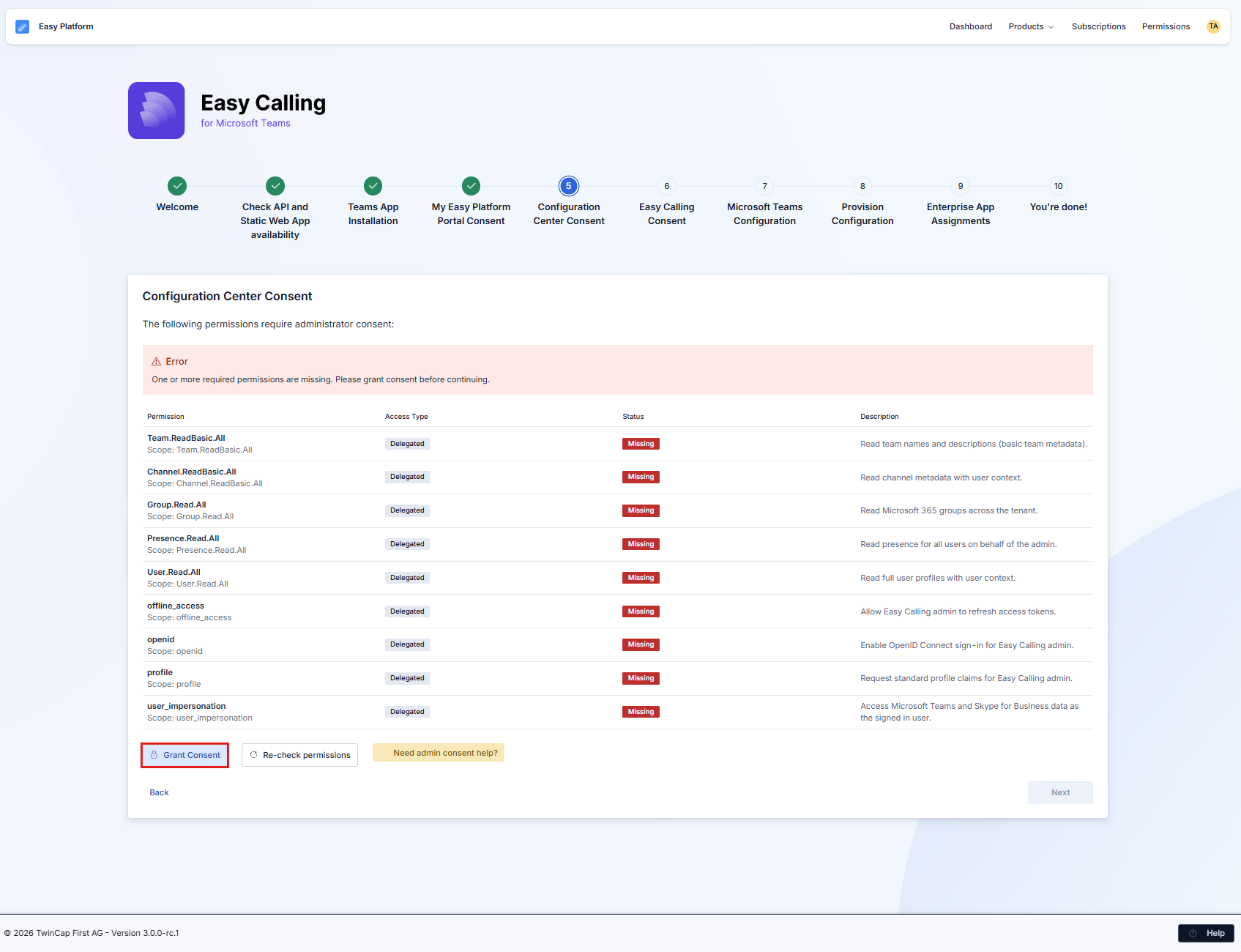
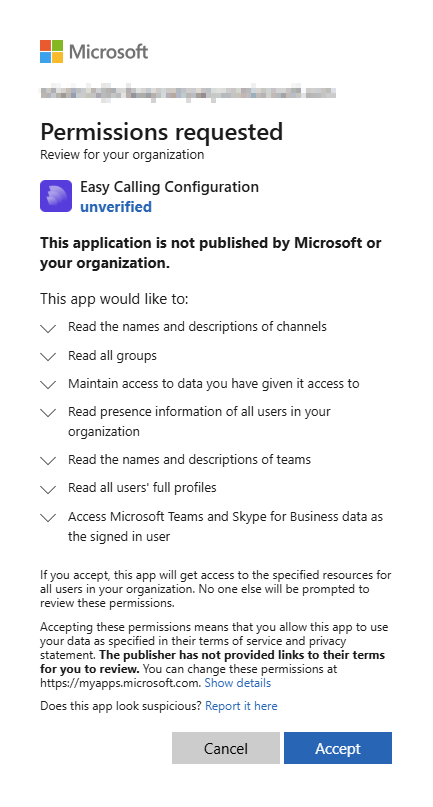
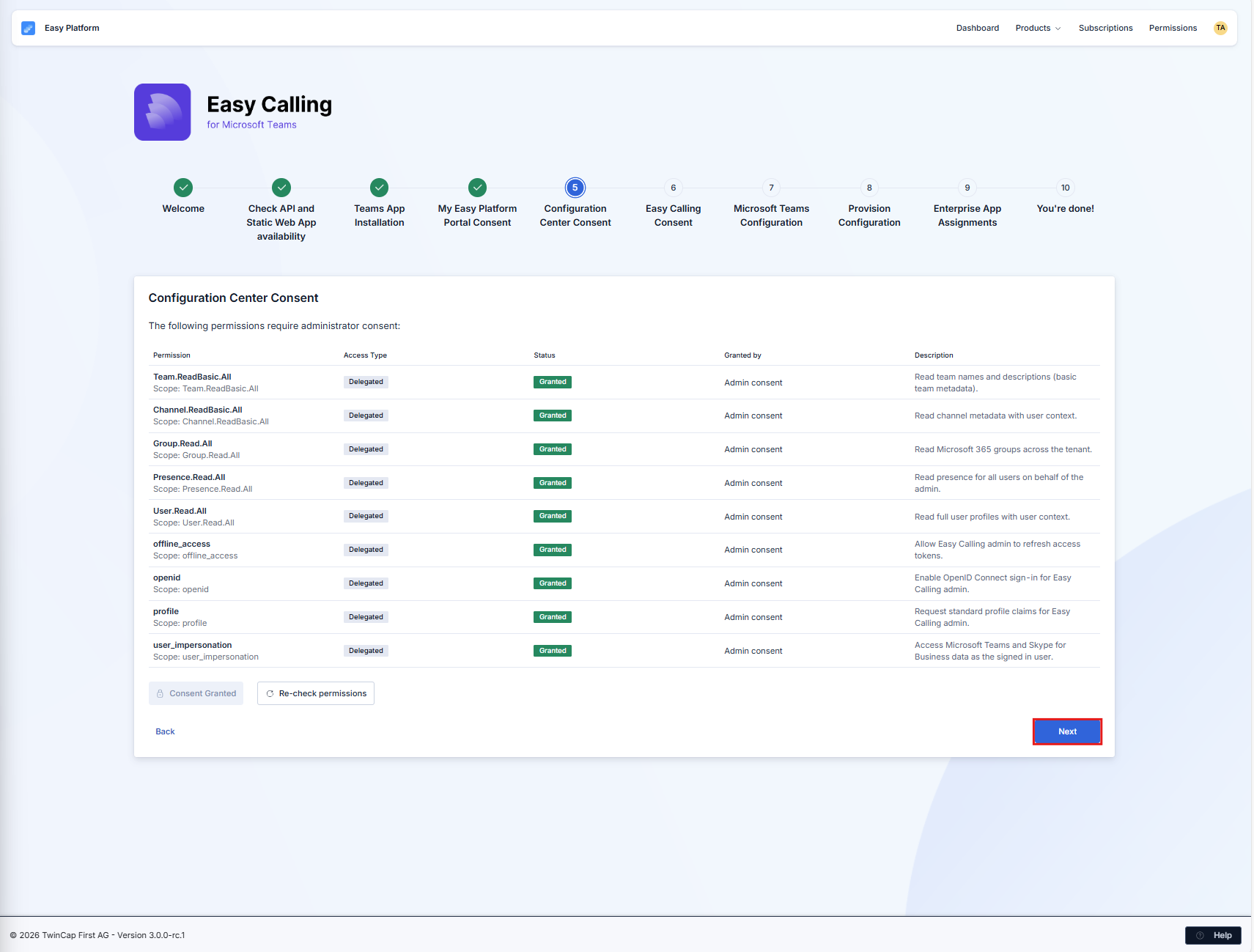
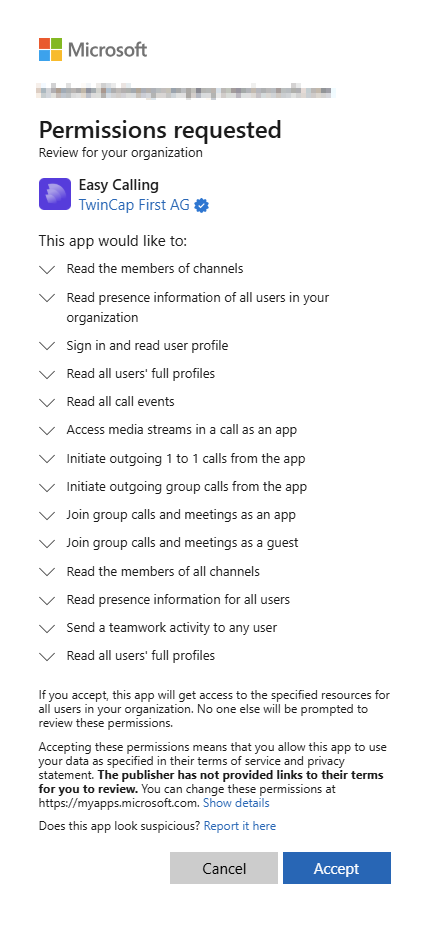
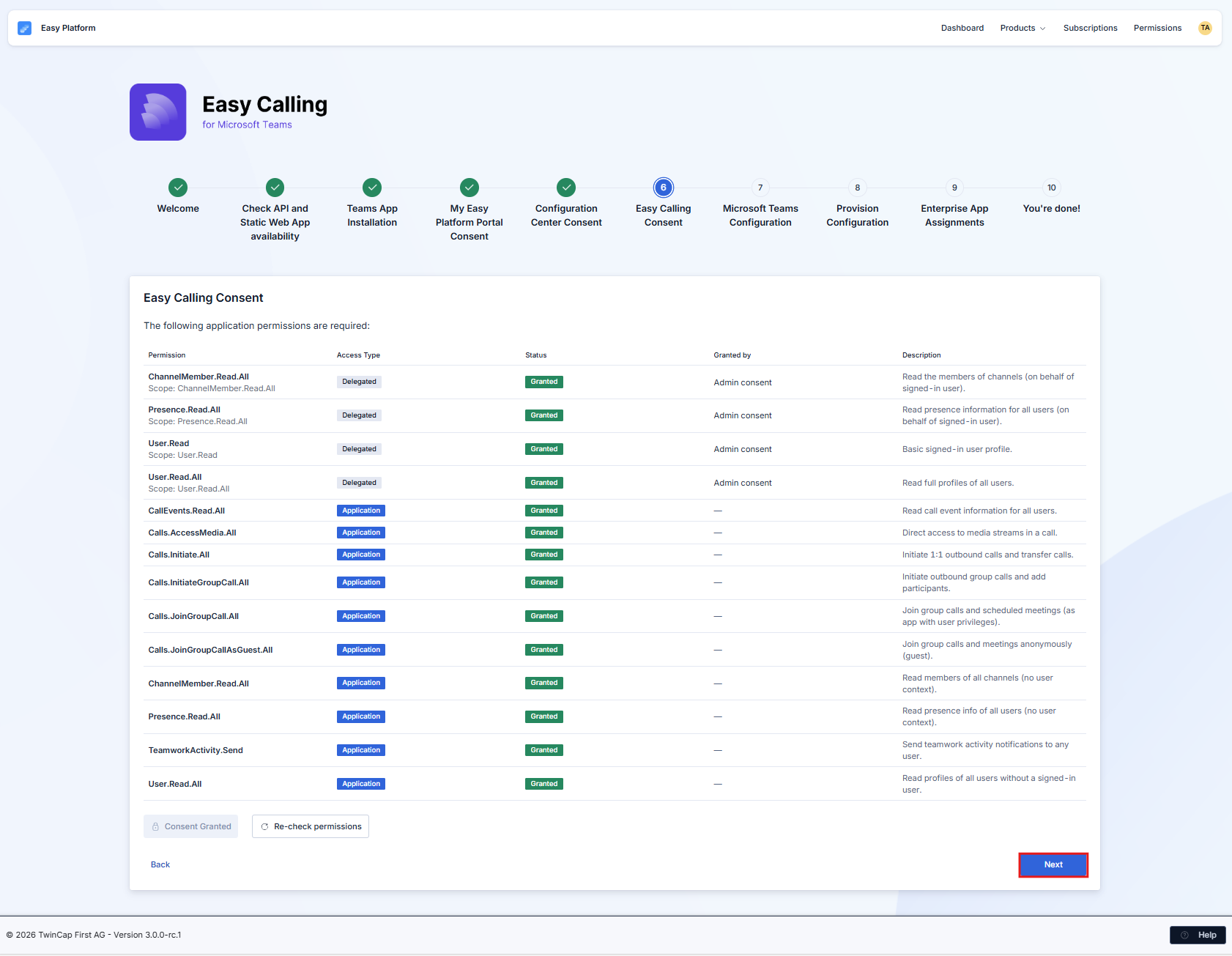
### Permission 3: Easy Calling Configuration (Call Management)
**What it does:** Allows Easy Calling to send and receive call information in real-time.
**What to do:**
1. Click the **"Grant Consent"** button
2. Sign in with your **Global Administrator** account (if prompted)
3. Review the permissions (these include call management capabilities)
4. Click **"Accept"**
If validation succeeds, click **"Next"** If validation fails, try granting consent again
***
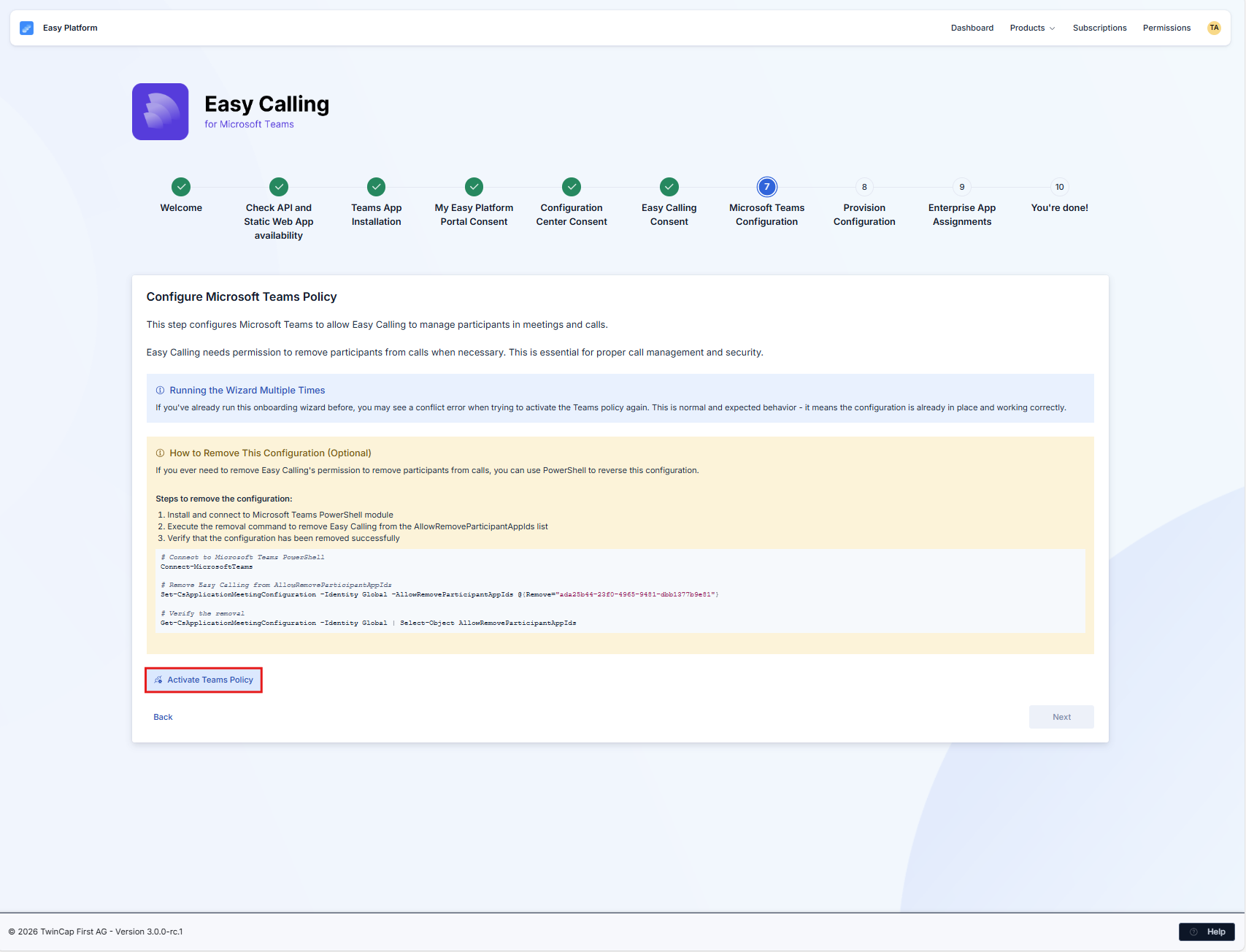
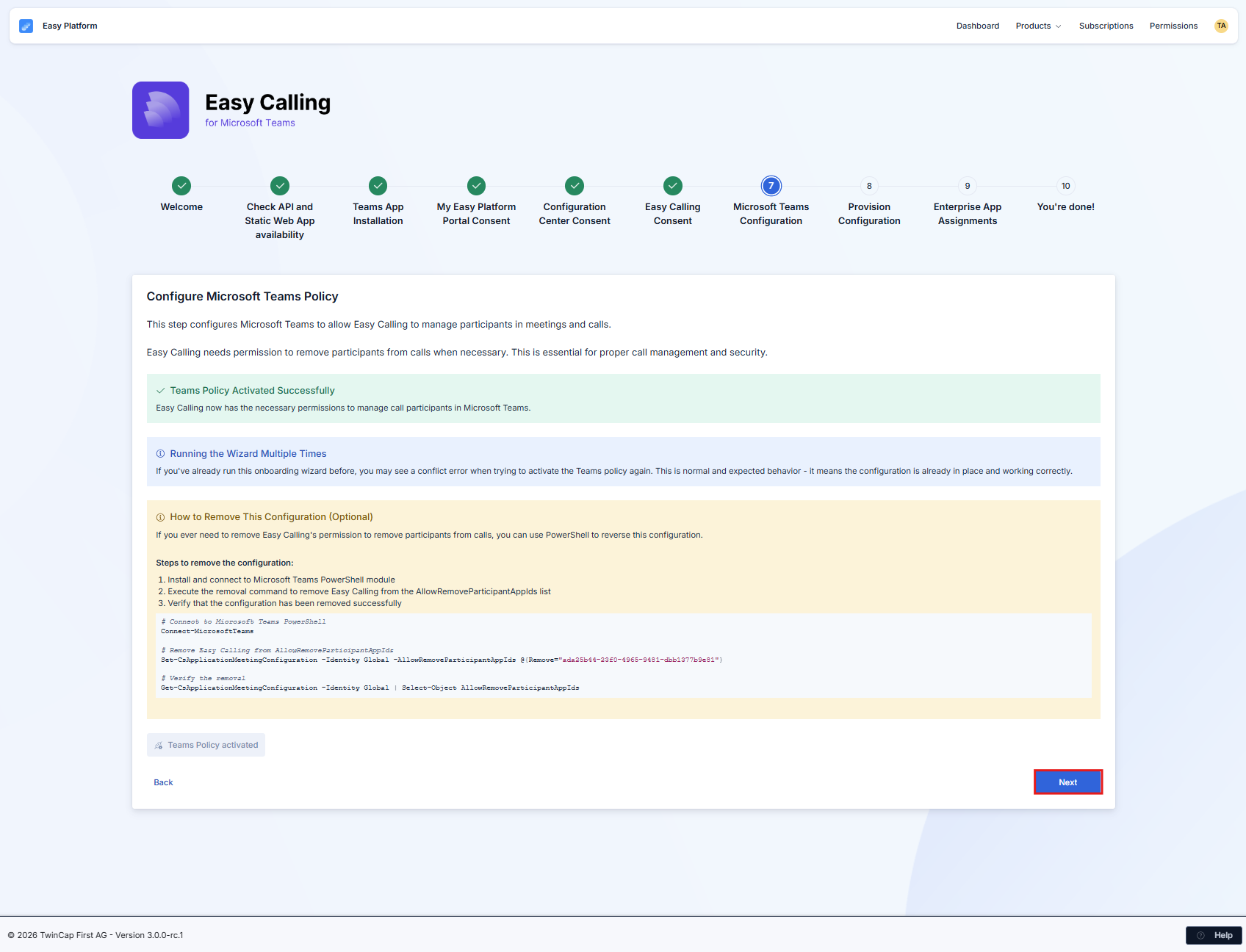
### Permission 4: Teams Policy (Call Transfers)
**What it does:** Allows Easy Calling to transfer calls and remove participants (required for transferring callers to different agents or queues).
**What to do:**
1. Click the **"Activate Teams Policy"** button
2. This will automatically configure the necessary Teams policy
The policy is being activated
If validation succeeds, click **"Next"** If validation fails, try granting consent again
{% hint style="info" %}
**What's a Teams Policy?** It's a set of rules that controls what apps can do in your Teams environment. This policy specifically allows Easy Calling to transfer calls between users.
{% endhint %}
***
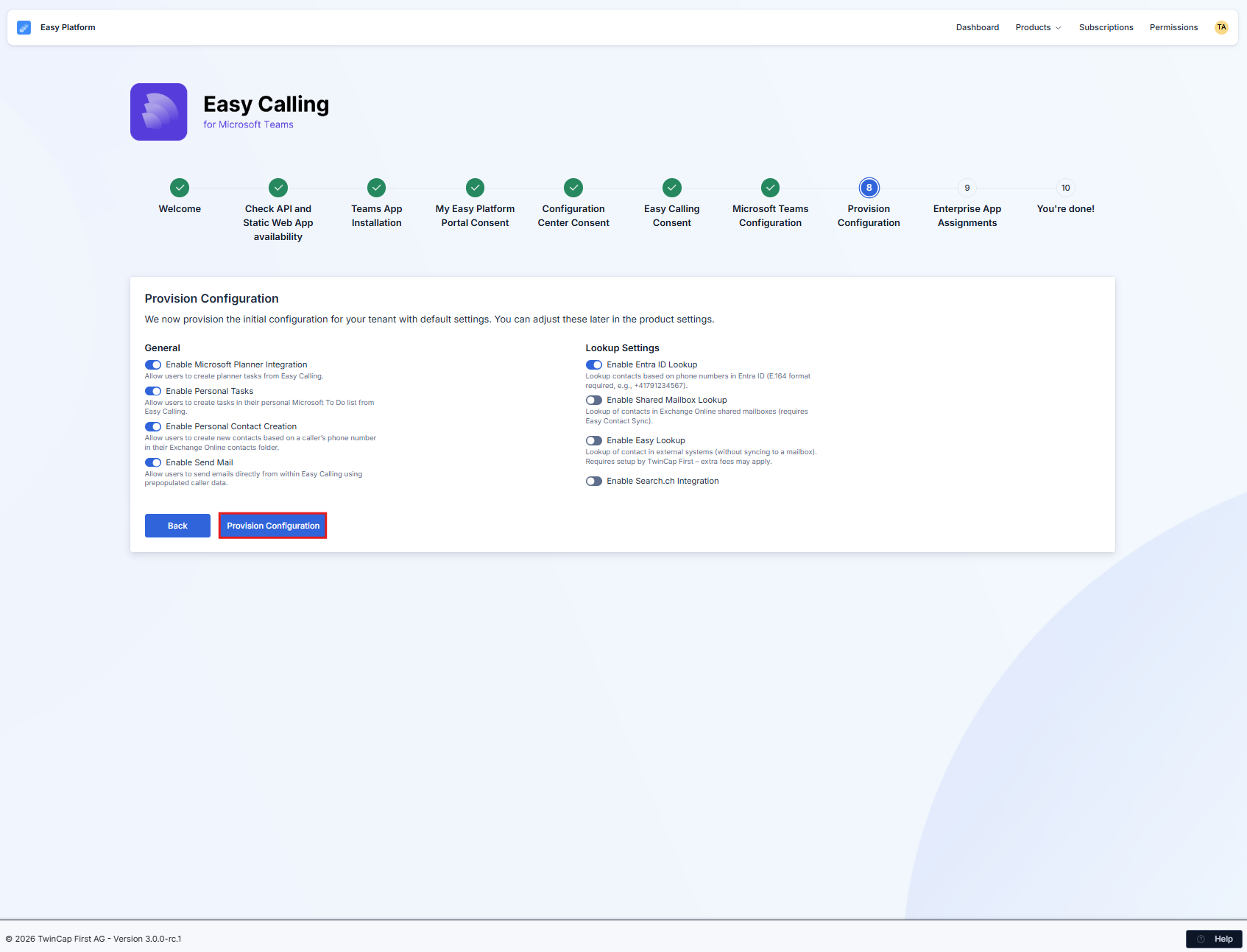
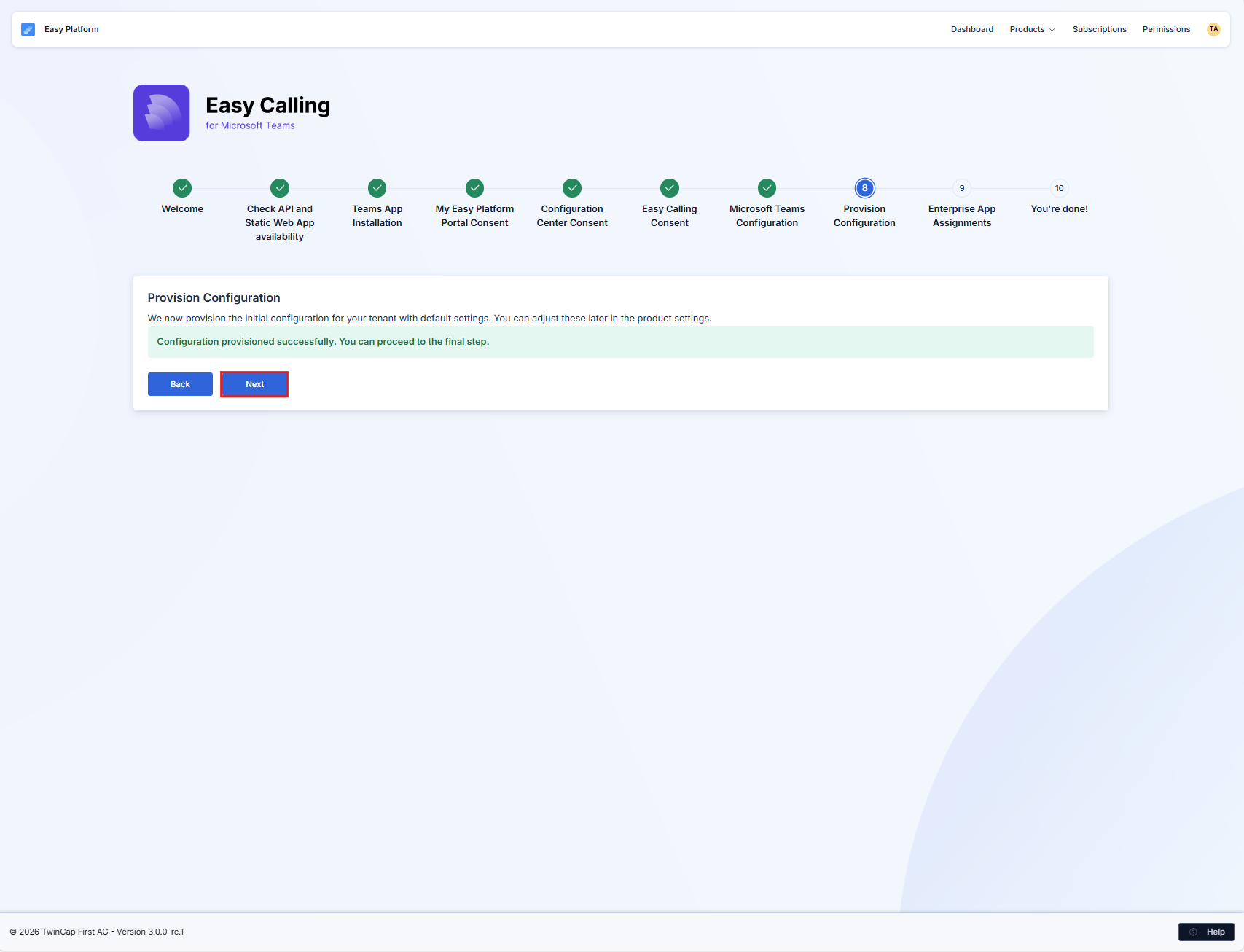
## Step 3: Configure Initial Settings (Optional)
Now you can enable some global features. **Don't worry–you can change these later.**
### Available Features
**Feature options:**
* **Enable Microsoft Planner** – Create tasks from calls in shared Planner boards
* **Enable Personal Tasks** – Create tasks in Microsoft To-Do
* **Enable Personal Contact Creation** – Save callers as personal contacts
* **Enable Send Mail** – Send follow-up emails directly from Easy Calling
* **Enable Entra ID Lookup** – Automatically identify callers from your directory
* **Enable Search.ch Integration** (Switzerland only) – Look up unknown Swiss phone numbers
**Our recommendation:** Enable all features initially. You can always turn off features later if your team doesn't use them.
**Click "Next"** to continue
***
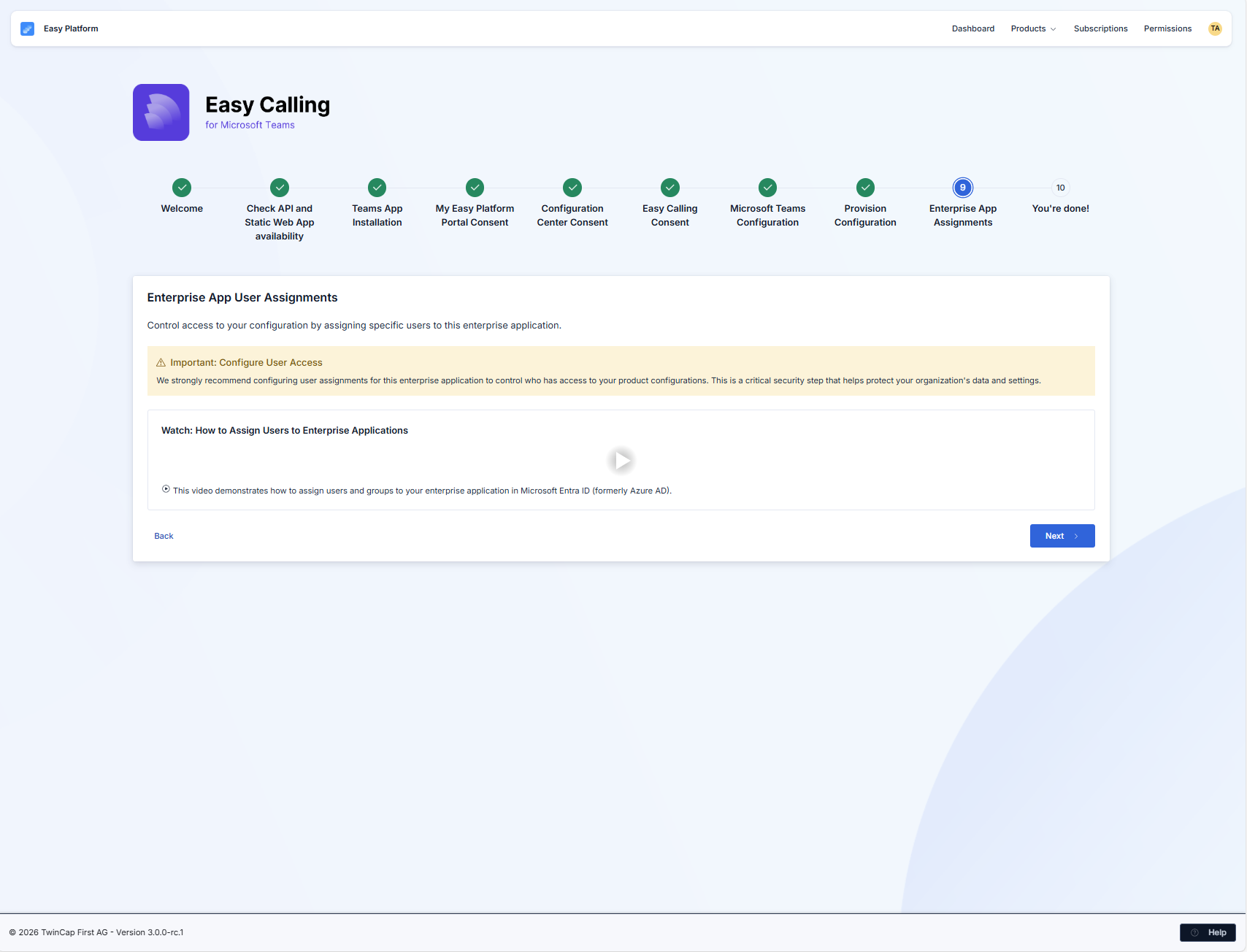
## Step 6: Set Access Permissions
Control who can access the Easy Platform configuration portal.
### Options:
**Option 1: All Users (Default)** Any user in your organization can log in to the Easy Platform portal with their Microsoft account.
**Option 2: Specific Users/Groups** Restrict access to only designated administrators or team leads.
**Our recommendation:** Start with "All Users" so anyone can explore the portal. Once you've set up your call queues, restrict access to administrators and voice app managers only.
**Click "Next"** to continue
***
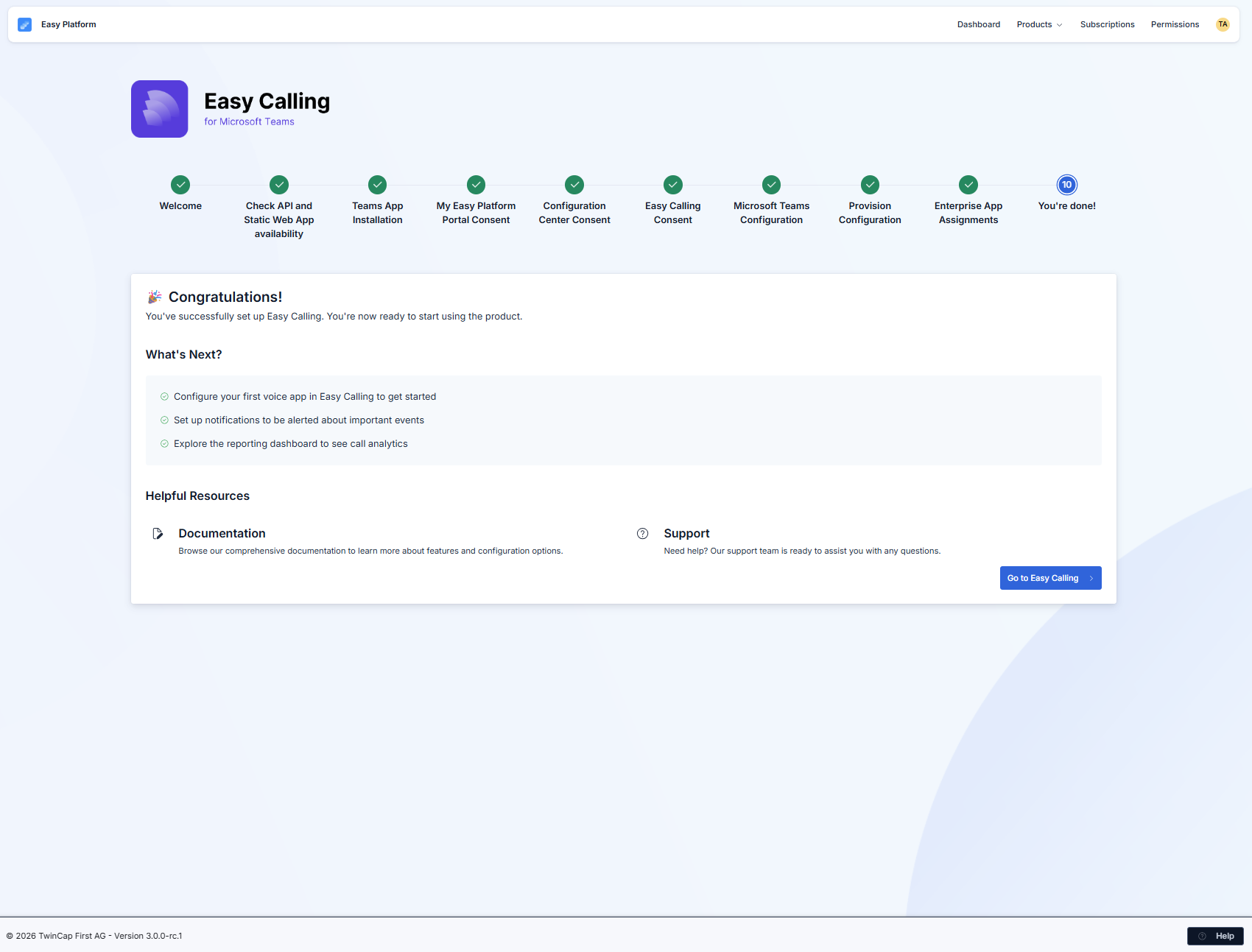
## Step 4: Installation Complete!
You've successfully installed Easy Calling. The final screen shows important links and resources.
**Save these links:**
* **Easy Platform Configuration Portal** – Where you'll create call queues
* **Easy Calling Documentation** – This guide and others
* **Support Contact** – If you need help
{% hint style="success" %}
**Congratulations!** You've successfully installed Easy Calling. Now it's time to create your first call queue.
{% endhint %}
***
## What's Next?
### Immediate Next Steps (Do These Now)
1. [**Configure Best Practices – Call Life Cycle Queue**](/getting-started/easy-calling-configuration.md) – Set up a call queue so calls can be routed to your team
2. [**Configure Teams Call Flow**](https://github.com/easy-platform/easycalling/blob/main/docs/end-user/getting-started/microsoft-teams-call-flow.md) – Connect your phone numbers to Easy Calling
3. **Add Your Team** – Assign agents to your call queue
### After Best Practices – Call Life Cycle Queue is Working
4. [**Train Your Team**](/getting-started/best-practices-call-life-cycle.md) – Share the Quick Start Guide with your agents
5. [**Set Up Voicemail**](https://github.com/easy-platform/easycalling/blob/main/docs/end-user/guides/how-to/setup-voicemail.md) – Configure voicemail greetings and routing
6. [**Customize Caller ID**](/getting-started/easy-calling-configuration.md#enable-entra-id-lookup-name-resolution) – Connect external databases for better caller identification
***
## Troubleshooting Installation Issues
### "Grant Consent" Button Doesn't Work
**Possible causes:**
* You're not signed in as a Global Administrator
* Your organization has additional security policies that block consent
**Solution:**
1. Confirm you're using a Global Administrator account
2. Contact your security team to temporarily allow admin consent
3. Try again in a private/incognito browser window
***
### "Validate Consent" Fails
**Possible causes:**
* The consent wasn't fully processed yet (Microsoft sometimes takes a minute)
* There was a network interruption
**Solution:**
1. Wait 60 seconds and click "Validate Consent" again
2. If it still fails, go back and grant consent again
3. Check the Azure Active Directory admin center to confirm the app permissions are listed
***
### Can't Upload the App Package
**Possible causes:**
* You don't have permissions to upload custom apps
* Custom app uploads are disabled in your tenant
**Solution:**
1. Verify you have Teams Administrator or Global Administrator rights
2. In Teams Admin Center, go to **Teams apps** → **Manage apps** → **Org-wide app settings**
3. Ensure "Upload custom apps" is turned ON
4. Try uploading again
***
### Installation Wizard Link Doesn't Work
**Possible causes:**
* The link expired
* You're opening it in an unsupported browser
**Solution:**
1. Contact TwinCap First support to request a new installation link
2. Try opening the link in Microsoft Edge or Google Chrome
3. Clear your browser cache and try again
***
### Performance Issues or Delayed Notifications in Virtual Environments (AVD, Citrix, Thin Clients)
**Possible causes:**
* The Easy Calling app relies on real-time signaling for call control and logic, making it highly sensitive to infrastructure latencies
* Virtual environments and terminal servers often experience unpredictable performance peaks, high CPU usage, or network latencies from the cloud provider
* These platform characteristics can throttle or block the app's real-time data transmission, resulting in delayed call cards or lagging UI actions
**Solution:**
* Best Practice: For a guaranteed synchronous and lag-free experience, we highly recommend deploying and running the Easy Calling app directly on local physical devices (Fat Clients).
* For Virtual Deployments: If running inside a virtual environment is mandatory, ensure that the virtualization platform is allocated sufficient, unthrottled resources so that the app's real-time signaling is never blocked.
***
## Need Help?
If you encounter any issues during installation:
* **Email:**
* **Phone (Switzerland):** +41 44 666 50 50
* **Phone (Germany):** +49 7431 893 99 60
**Before contacting support, have this information ready:**
* Which step you're stuck on
* Any error messages you're seeing
* Screenshots (if applicable)
* Your organization's domain name
***
## Installation Checklist
Use this checklist to track your progress:
* [ ] Downloaded Easy Calling app package
* [ ] Uploaded app to Teams Admin Center
* [ ] Verified app appears in Manage Apps
* [ ] Received installation wizard link via email
* [ ] Opened wizard and signed in as Global Administrator
* [ ] Granted consent for User Settings
* [ ] Granted consent for Easy Platform
* [ ] Granted consent for Call Management
* [ ] Activated Teams Policy
* [ ] Configured global feature settings
* [ ] Set access permissions
* [ ] Saved configuration portal link
* [ ] **Next:** [Configure first call queue](/getting-started/easy-calling-configuration.md)
***
**Ready to create your first call queue?** Head to the [Configuration Guide](/getting-started/easy-calling-configuration.md) to get started!